What Is FUT Hair Transplantation? What Are the Pros and Cons Compared with FUE?
What Is FUT Hair Transplantation?
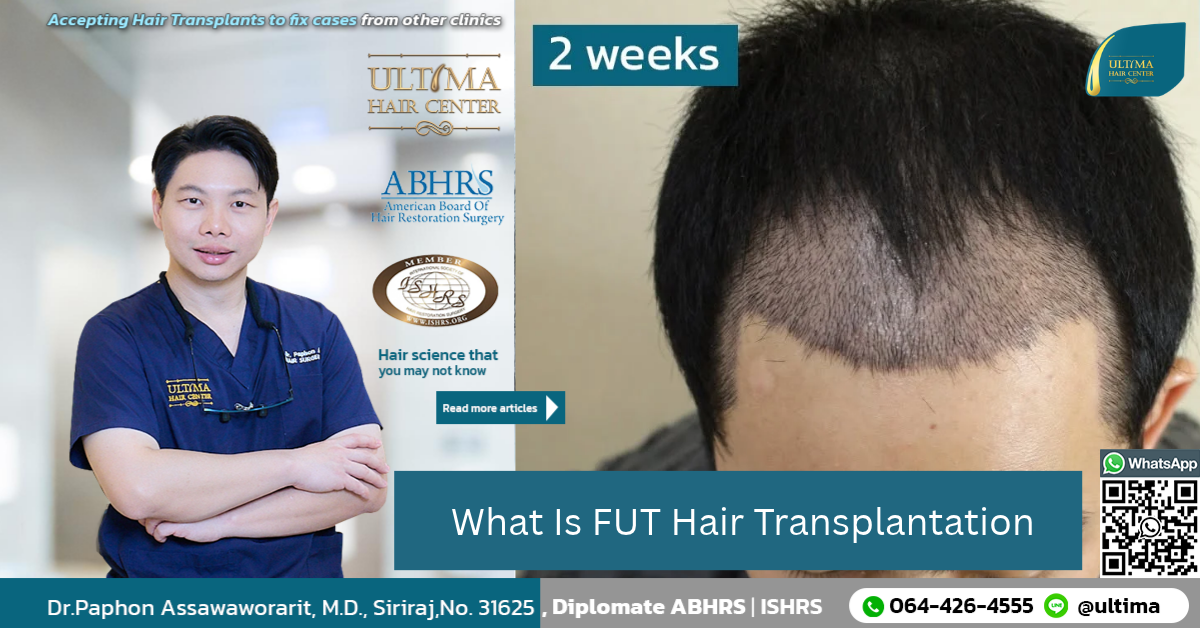
What Are the Pros and Cons Compared with FUE?
If you are researching hair transplantation, you may have heard of FUE and FUT but are still unsure how these two techniques differ and which one may be more suitable for you
Today, FUE and FUT are the two main methods for harvesting hair grafts from the Donor area and transplanting them to areas affected by thinning hair or baldness. The key difference lies mainly in how the grafts are harvested, rather than how they are placed in the recipient area, such as the frontal or mid-scalp region. Both techniques can provide Follicular Units that can be used for hairline design and hair transplantation
FUT stands for Follicular Unit Transplantation, also commonly known as the Strip Method. This technique involves removing a strip of tissue from the Donor area and then carefully dissecting it into individual hair grafts under microscopic magnification before transplantation
FUE, or Follicular Unit Excision, involves removing individual grafts from the Donor area one by one using a small punch before transplanting them into the desired area
Therefore, if you ask, “What is the difference between FUT and FUE?”, the short answer is that the main difference is how the hair grafts are harvested
However, when looking at the decision in greater detail, several other factors also need to be considered, including scarring in the Donor area, the number of grafts that can be harvested, hair characteristics, recovery, lifestyle, and long-term hair transplant planning
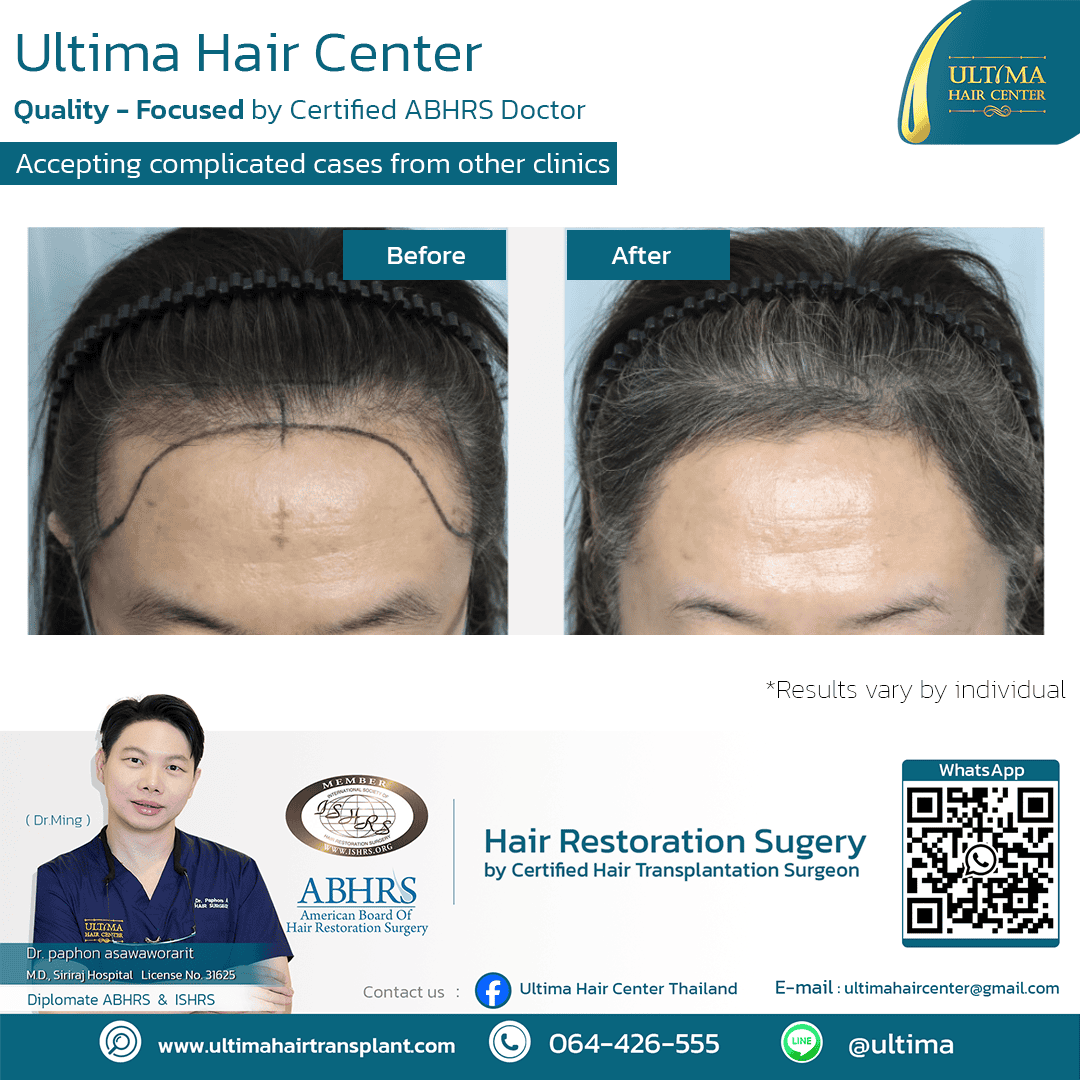 What Is FUT?
FUT, or Follicular Unit Transplantation, is a hair transplant technique in which a strip of scalp tissue is removed from the Donor area. The tissue strip is then dissected into individual grafts or Follicular Units under microscopic magnification before the grafts are transplanted into the desired recipient area
The key principle is to preserve the Follicular Units and hair grafts as completely as possible so they can be used for transplantation
The procedure can generally be explained in the following steps
- Evaluate the Donor area and recipient area
- Plan the number of grafts and the areas to be transplanted
- Administer local anesthesia
- Remove a strip of tissue from the Donor area
- Close the wound where the strip was removed
- Dissect the tissue into individual grafts under magnification
- Prepare and sort the grafts for transplantation
- Prepare the recipient area according to the treatment plan
- Place the grafts into the designed positions
Detailed graft preparation and recipient-site design are therefore important factors in the final result, rather than focusing only on the removal of the tissue strip
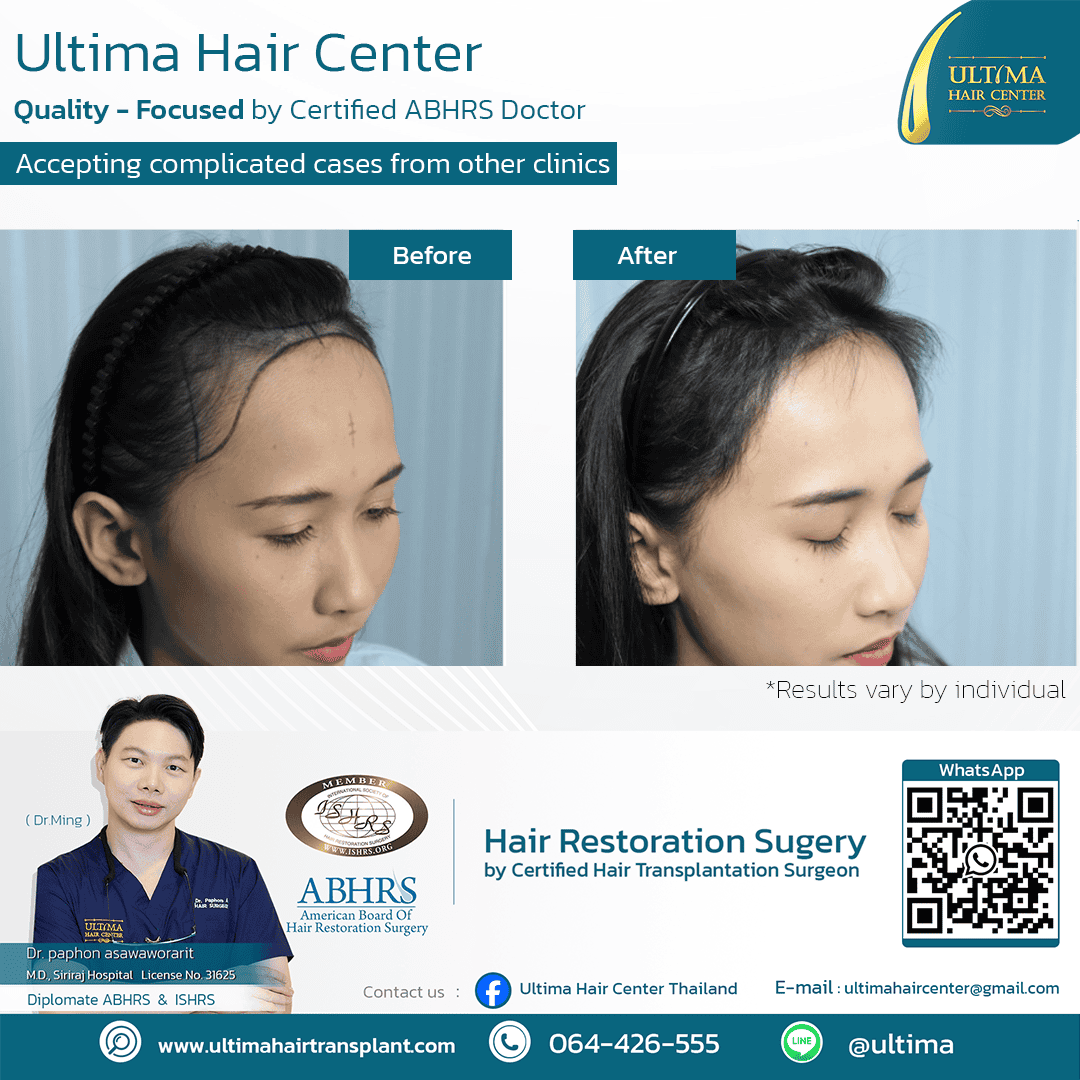 What Is the Difference Between FUT and FUE?
The most obvious difference is the way the grafts are harvested
FUT
A strip of tissue is removed from the Donor area and then dissected into individual grafts under magnification
FUE
Individual grafts are removed one by one from the Donor area using a small punch
As a result, the appearance of the Donor area after surgery is different between the two techniques
FUT creates a linear scar in the area where the tissue strip was removed, while FUE creates multiple small wounds at the individual extraction sites. FUE does not mean that there is no scarring, because each punch site can leave a small mark, but it does not create a linear scar like FUT
This is therefore an important factor to consider, particularly for people who prefer to wear their hair very short
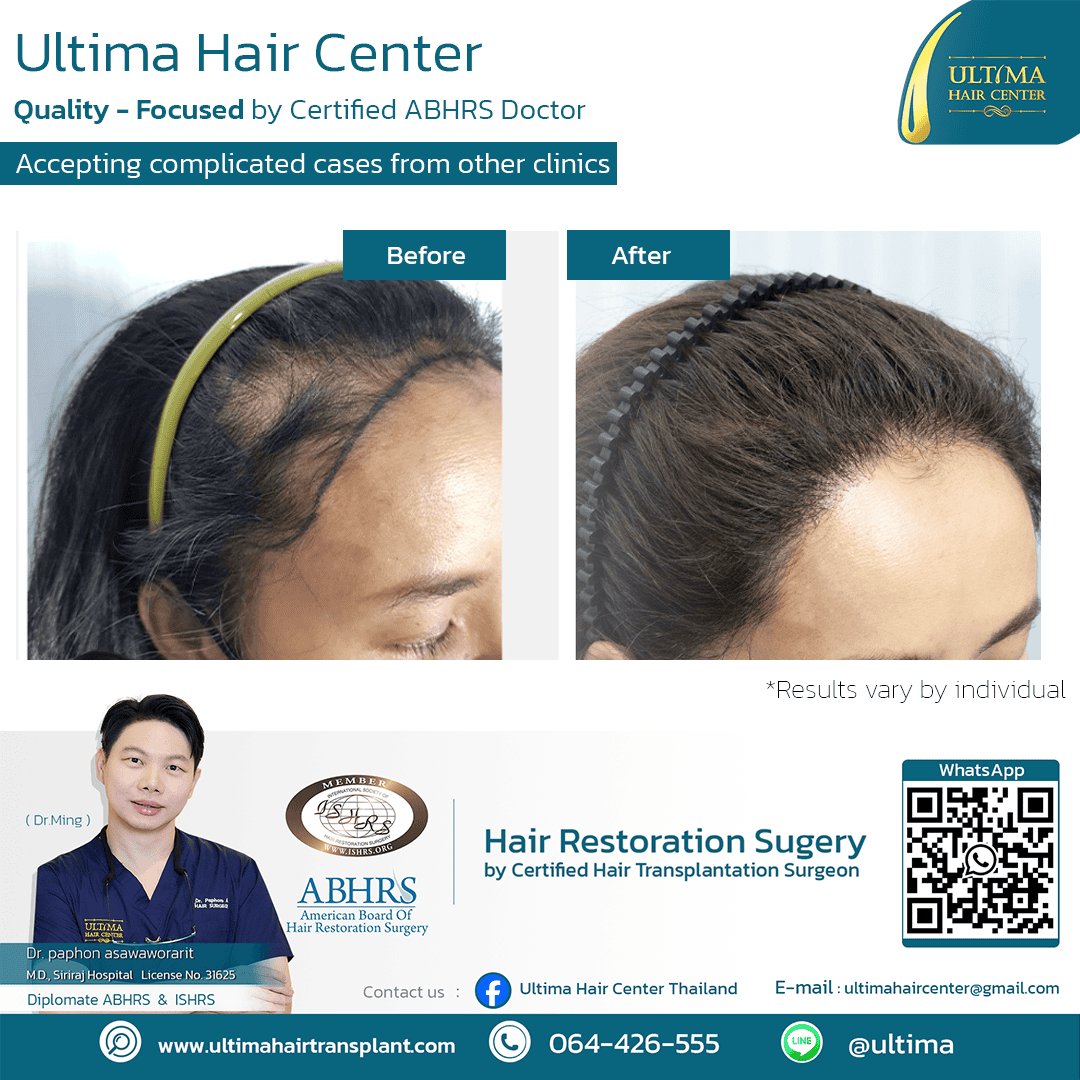 Advantages of FUT Hair Transplantation
1. It Can Allow a Large Number of Grafts to Be Harvested
One of the advantages of FUT is that tissue is removed as a strip from the Donor area, allowing a large number of Follicular Units from an appropriate area to be dissected into individual grafts
For some patients, FUT may therefore be suitable for a hair transplant plan that requires a relatively large number of grafts, particularly when the quality and available area of the Donor area are taken into account
2. It Can Provide Well-Preserved Hair Grafts
After the tissue strip is removed, the grafts are dissected from the tissue under microscopic magnification. This allows the hair roots and structures of the Follicular Units to be seen more clearly and may help preserve the grafts during preparation
Detailed graft preparation is important for achieving a good growth rate after hair transplantation
Academic literature regarding FUT describes an advantage of Strip Harvesting as the ability to dissect tissue into grafts under magnification, which can help reduce the risk of cutting through Follicular Units during graft harvesting compared with extracting individual grafts using FUE. During FUE, the surgeon sees the hair shafts above the scalp rather than the entire hair root structure while performing the punch extraction
3. The Density of Hair at the Back of the Scalp Is Not Reduced in the Same Pattern
With FUT, the hair density above and below the linear incision remains unchanged in the areas where tissue is not removed. This differs from FUE, where individual grafts are harvested in a distributed pattern from the back of the scalp, resulting in a reduction in hair density corresponding to the number of grafts removed
4. There Is Mainly One Linear Scar
Another advantage of FUT is that the Donor area has one primary linear scar rather than many small extraction sites as seen with FUE
For some patients, this can be an advantage because the position of the scar can be planned so that it remains beneath the surrounding hair in the Donor area
However, the width and appearance of the scar depend on several factors, including surgical technique, wound closure, scalp laxity, and each individual's healing response
5. It May Be an Option for Long-Term Donor Area Management
Hair transplantation should not be planned only around the first procedure. It is also important to consider how much Donor area will remain available if the patient's original hair continues to thin in the future
FUT and FUE involve different approaches to Donor area management. The choice should therefore consider the number of grafts required, the characteristics of the Donor area, and the overall treatment plan rather than choosing a technique simply because it has a “smaller scar” or “fewer visible wounds”
 Disadvantages of FUT Hair Transplantation
1. It Creates a Linear Scar in the Donor Area
The most obvious limitation of FUT is the linear scar created in the area where the tissue strip is removed
Although the scar can be planned to remain beneath the surrounding hair and wound-closure techniques may be used to minimize its width, patients should understand that a scar will remain in this area
Therefore, people who want to wear their hair very short, making the scalp at the back and sides more visible, should consider this factor carefully
2. The Wound Needs to Be Closed
Because FUT involves removing a strip of tissue, the wound in the Donor area needs to be closed
Proper wound care and postoperative follow-up are therefore important. Patients should follow their physician's instructions regarding wound care, sleeping position, hair washing, and returning to normal activities
3. There May Be a Feeling of Tightness in the Scalp
Because tissue is removed and the wound is closed, some patients may experience a feeling of tightness or discomfort in the Donor area during the recovery period
The degree of tightness varies between individuals and depends on factors such as the size of the incision, wound-closure technique, and characteristics of the scalp
 What Is FUE?
FUE stands for Follicular Unit Excision, which is the term currently used to describe the removal of Follicular Units from the Donor area using a small punch
The term FUE was previously commonly expanded as Follicular Unit Extraction. However, the ISHRS has emphasized the term Follicular Unit Excision to more accurately describe the process of creating the wound and removing the graft from the Donor area
During FUE, the physician uses a punch appropriate for the patient's hair characteristics and Follicular Unit anatomy and removes the grafts individually
The Donor area therefore contains multiple small extraction sites rather than a linear wound as seen with FUT
 Advantages of FUE Compared with FUT
1. There Is No Linear Scar
This is one of the main reasons FUE has become popular
Because no strip of scalp is removed, FUE does not create the linear scar associated with FUT
This may be suitable for people who place a high value on wearing their hair short or who do not want a linear scar in the Donor area
However, FUE should not be described as “scarless”, because individual graft extraction creates small wounds at the punch sites, which may leave small marks
2. The Donor Area Wounds Are Small
FUE creates small extraction wounds rather than the linear incision associated with FUT, and these wounds generally recover relatively quickly
This is another reason FUE may be suitable for people who want to return to daily activities relatively quickly or who want to wear their hair shorter than may be practical after FUT in some cases
3. Grafts Can Be Selected from Different Areas
Because FUE allows grafts to be harvested individually, the physician can plan the selection of grafts according to the characteristics of the hair in different areas
In addition, in selected cases, FUE can be used to harvest hair from other areas of the body, which is not possible with FUT in the same manner
 Disadvantages of FUE Compared with FUT
1. Hair Density at the Back of the Scalp Decreases
With FUE, individual grafts are harvested in a distributed pattern from the back of the scalp. Therefore, hair density in the Donor area decreases according to the number of grafts removed
If a very large number of grafts is harvested, this may result in reduced hair density in the back of the scalp and potentially become a long-term concern
2. Accurate Punching Is Important
Each Follicular Unit has its own direction and depth. Positioning the punch appropriately in relation to the direction of the Follicular Unit is therefore important
If the punch is not aligned properly with the direction of the hair, the graft may be damaged or Transection may occur
The physician's technical skill and the appropriate selection of instruments therefore play an important role in the quality of the harvested grafts
3. Excessive Harvesting Can Make the Donor Area Look Uneven
Because FUE removes grafts from individual points, harvesting too many grafts from a particular area may reduce the density in that region and create an uneven appearance
FUE therefore does not mean that grafts can be removed without considering the Donor area
Distributing the harvesting sites appropriately is an important part of the overall treatment plan
 FUT vs FUE Comparison Table
| Topic | FUT | FUE |
|---|---|---|
| Graft harvesting method | A tissue strip is removed and dissected into individual grafts | Grafts are removed individually |
| Full name | Follicular Unit Transplantation | Follicular Unit Excision |
| Donor area scar | Linear scar | Multiple small extraction sites |
| Hair density at the back | Not reduced in the same pattern | Density decreases according to the number of grafts harvested |
| Very short hairstyles | The linear scar should be considered | Often has an advantage in this regard |
| Graft harvesting time | Generally shorter for harvesting a large number of grafts | May take longer when harvesting a large number of grafts |
| Donor area management | Tissue is harvested from a planned strip | Grafts are harvested from distributed locations |
| Risk of Transection | Present, but microscopic dissection can help control the risk during graft preparation | Requires accurate punching and alignment |
| Who may be suitable | Some patients requiring a large number of grafts or with specific considerations | Some patients who place importance on avoiding a linear scar |
| Choosing the technique | Must be assessed individually | Must be assessed individually |
This table provides a general comparison of the two techniques. It does not mean that one technique is suitable for every patient, because outcomes also depend on patient selection, treatment planning, and surgical technique
 Which Is Better: FUT or FUE?
This is a common question, but there is no single answer that applies to everyone
Academic reviews indicate that both FUT and FUE have different advantages and limitations, and the choice should be individualized based on factors such as
People who want to wear their hair very short may place greater importance on avoiding a linear scar and may therefore consider FUE
People who require a large number of grafts or have a Donor area suitable for Strip Harvesting may have reasons to consider FUT
People planning multiple hair transplant procedures may need to assess long-term Donor area management and may consider FUT, FUE, or a combination of both in selected cases
Therefore, the decision should not be based simply on the idea that “FUE is newer” or “FUT has been used for longer”
The more important question is
“Which technique is suitable for my hair characteristics and goals?”
 Can FUT and FUE Be Combined?
In selected patients, FUT and FUE can be considered together, with the goal of managing available grafts from the Donor area according to the patient's limitations and treatment plan
However, combining the two techniques does not mean that this approach is suitable for everyone. Several factors need to be evaluated, including
- Number of grafts required
- Condition of the Donor area
- Hair density
- Hair characteristics
- Previous hair transplant history
- Current goals
- Long-term treatment plan
Academic reports have described the combination of FUT and FUE as an option for selected patients. However, the choice should be based on an individualized medical assessment
 Who May Be Suitable for FUT?
FUT may be an interesting option for some patients, including
- People who need a treatment plan involving a large number of grafts
- People who do not want the density of hair at the back of the scalp to decrease
- People who want well-preserved grafts with a good growth rate
- People who do not place a high priority on wearing their hair very short
- People who want to manage their Donor area resources over the long term
- People whose medical assessment indicates that FUT is suitable for their treatment plan
However, having one or more of these characteristics does not automatically mean that FUT is the right choice
The physician should still evaluate the patient's actual condition before making a decision
 Who May Be Suitable for FUE?
FUE may be suitable for some groups of patients, such as
- People who want to avoid a linear scar
- People who want to wear their hair short
- People whose Donor area is suitable for distributed graft harvesting
- People who want relatively rapid recovery of the Donor area
- People who may need grafts harvested from other areas in selected cases
Similarly, having these characteristics does not mean that FUE is automatically suitable for everyone
 What Should You Consider When Choosing FUT or FUE?
Before making a decision, it is recommended to discuss the following important factors with your physician
1. Condition of the Donor Area
How dense is the Donor area, and approximately how many grafts can be safely harvested?
2. Areas to Be Transplanted
Do you need transplantation only at the Hairline, on the top of the scalp, in the Crown, or in several areas?
3. Number of Grafts
The number of grafts should correspond to the treatment area and the patient's goals rather than simply choosing the highest possible number
4. Lifestyle
Do you usually wear your hair long or short? How quickly do you need to return to work? What type of scar are you most concerned about?
5. Previous Hair Transplant History
If you have undergone a previous hair transplant, the choice of technique may differ from that of someone who has never had hair transplant surgery
6. Long-Term Planning
If your original hair may continue to thin, long-term management of the Donor area should also be considered
 Why Is Choosing the Right Doctor More Important Than Choosing the Technique Name?
Whether FUT or FUE is selected, the final outcome does not depend on the name of the technique alone
It also involves
Evaluation → Treatment Planning → Hairline Design → Graft Selection → Graft Harvesting → Graft Preparation → Graft Placement → Postoperative Care
If the goal is a natural-looking hair transplant, all of these details are important
Hair transplantation is not simply about increasing the number of hairs. It also requires consideration of the position, direction, angle, density, and distribution of grafts in different areas
Therefore, instead of asking only
“Which is better, FUE or FUT?”
it may be more useful to ask
“For my hair characteristics and Donor area, which technique does the physician recommend, and why?”
 What Should You Look for in FUT Hair Transplant Reviews?
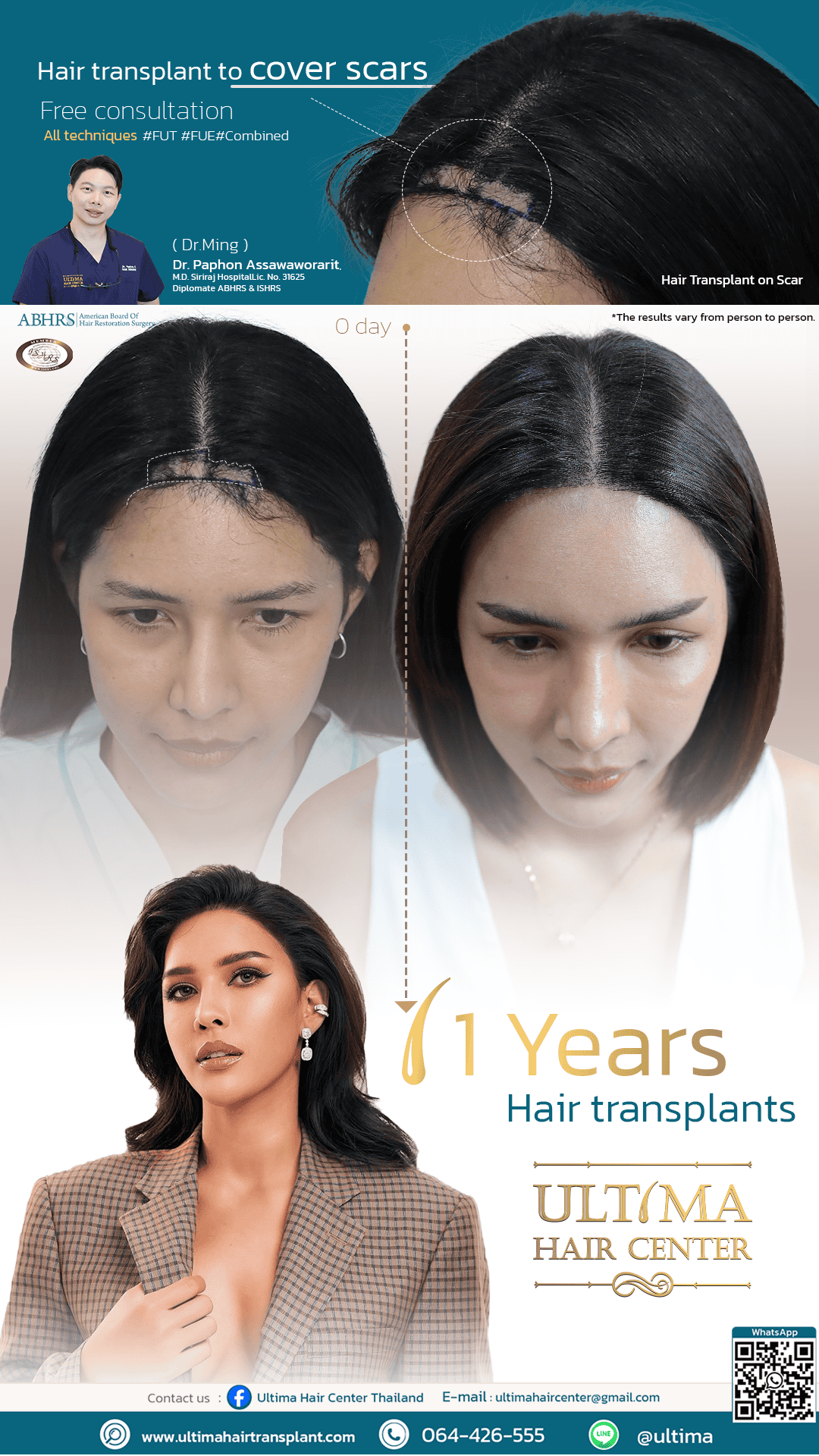
If you are searching for hair transplant reviews and find FUT cases, you should look at more than just photographs of the recipient area
It is also useful to consider
- How many grafts were used
- Which areas were transplanted
- How many months after the procedure the photographs were taken
- What the Donor area looks like
- Whether the patient wears their hair long or short
- Whether the patient had undergone a previous hair transplant
- Whether other treatments were used at the same time
Most importantly, do not use one patient's photographs as a direct prediction of your own result, because hair characteristics, Donor area density, and the condition before transplantation can be different
Hair transplant reviews should therefore be used to understand patient experiences and generate additional questions rather than as evidence that you will achieve exactly the same result
 How to Choose a Hair Transplant Clinic If You Are Considering FUT
If you are searching for a hair transplant clinic in Bangkok and are considering FUT, it is useful to ask more detailed questions than simply asking about the price
For example
- How does the physician evaluate the Donor area?
- Why is FUT or FUE being recommended?
- How many grafts are required?
- Where will the scar be located?
- How will the scar be planned and managed?
- How will the grafts be prepared?
- How will the Hairline be designed?
- Is there a plan for the original hair that may continue to thin?
- How will postoperative follow-up be managed?
These questions can help patients understand whether the clinic selects a technique based on the individual assessment rather than simply choosing a technique because it is popular
 Ultima Hair Center's Approach to Choosing FUT or FUE
At Ultima Hair Center, an important principle is that the choice of hair transplant technique should begin with an individual patient assessment rather than starting with the assumption that one technique must be used for everyone
FUT and FUE both have their own advantages and limitations. The decision should therefore take into account the condition of the Donor area, recipient areas, number of grafts, hair characteristics, and the patient's goals
Dr. Paphon Asawaworarit, also known as Dr. Ming, is listed in the Physician Directory of the American Board of Hair Restoration Surgery, or ABHRS. The database identifies his status as Verified and lists Certification Year 2019
For patients interested in hair transplantation with an American Board-certified ABHRS physician, the physician's information can be checked directly through the ABHRS database
In addition, the clinic places importance on direct communication with patients. Dr. Ming personally responds to patient messages, and patients can consult Dr. Ming for free to discuss preliminary information before undergoing an in-person assessment
 Quality-Focused Hair Transplantation Should Not Be Based on the Technique Name Alone
The concept of quality-focused hair transplantation does not mean that every patient should choose FUT or FUE
The quality of a hair transplant depends on the entire process, including Donor area evaluation, treatment planning, Hairline design, graft harvesting and preparation, graft placement, and postoperative follow-up
Some patients may be more suitable for FUT
Others may be more suitable for FUE
Some patients may have reasons to consider combining both techniques
The important point is to have the physician explain why a particular technique is being recommended and whether that approach is consistent with the patient's goals
 Summary: Which Is Better, FUT or FUE?
FUT, or Follicular Unit Transplantation, is a graft harvesting technique in which tissue is removed from the Donor area as a strip and then dissected into individual grafts. Its potential advantages include the ability to harvest a large number of grafts, well-preserved grafts, good growth potential, and maintaining the density of the remaining hair at the back of the scalp in the areas outside the strip. Its main limitation is the presence of a linear scar
FUE, or Follicular Unit Excision, involves removing individual grafts using a small punch. Its main advantage is that it does not create a linear scar and may be suitable for people who place importance on wearing their hair short. However, the density of hair in the Donor area decreases according to the number of grafts harvested, and graft quality can potentially be affected during the punch extraction process
Therefore, there is no single answer as to whether FUT or FUE is suitable for everyone
If you are considering hair transplantation, you should evaluate the physician, Donor area, number of grafts, transplant goals, lifestyle, and long-term treatment plan together
For those looking for a hair transplant clinic in Bangkok and wanting to discuss whether FUT or FUE may be suitable for them, you can consult Dr. Ming for free and ask for preliminary information. Dr. Ming personally responds to patient messages
The goal of choosing a technique should not simply be to select the most popular method, but to identify the approach that is appropriate for the individual's hair characteristics, Donor area, and goals, allowing a natural-looking hair transplant to be properly planned from the beginning
 Frequently Asked Questions About FUT and FUE
1. What is FUT?
FUT stands for Follicular Unit Transplantation, also known as the Strip Method. It is a hair transplant technique in which a strip of tissue is removed from the Donor area and then dissected into individual grafts under microscopic magnification before the grafts are transplanted into areas affected by thinning hair or baldness
2. What is the difference between FUT and FUE?
The main difference is how the grafts are harvested. FUT removes a strip of tissue and then dissects it into individual grafts, while FUE, or Follicular Unit Excision, removes individual grafts one by one using a small punch. This results in different types of wounds and scarring in the Donor area
3. What are the advantages of FUT?
One advantage of FUT is that tissue from the Donor area can be dissected into individual grafts under microscopic magnification. In selected patients, a large number of grafts may be planned for harvesting. This may provide well-preserved grafts, a good growth rate, and maintenance of hair density in the remaining areas at the back of the scalp
4. What are the disadvantages of FUT?
The main limitation is the linear scar in the Donor area. People who want to wear their hair very short should discuss the expected appearance of the scar and whether FUT is suitable for them with their physician before making a decision
5. Is FUE better than FUT?
It cannot be concluded that FUE is better than FUT for everyone. Both techniques have different advantages and limitations. FUE may be suitable for people who want to avoid a linear scar, while FUT may offer advantages in some treatment plans requiring a large number of grafts. The choice should be individualized
6. Who may be suitable for FUT?
FUT may be suitable for some patients with an appropriate Donor area who require a treatment plan involving a large number of grafts, want to maintain the density of the remaining hair at the back of the scalp, and want well-preserved grafts with a good growth rate
7. Does FUE leave scars?
FUE does not mean that there is no scarring. Each individual graft extraction creates a small wound at the punch site. However, it does not create a linear scar like FUT
8. Can FUT and FUE be combined?
In selected patients, FUT and FUE may be considered together depending on the number of grafts required, the condition of the Donor area, previous hair transplant history, and the overall treatment plan. However, combining the techniques is not necessary for everyone
9. Can FUT provide more grafts than FUE?
There should not be a fixed number applied to every patient. The number of grafts that can be harvested depends on the Donor area, hair characteristics, size of the recipient area, and the physician's treatment plan. In some patients, FUT may have advantages when a large number of grafts is required, but this must be assessed individually
10. Can FUT produce a natural-looking result?
A natural-looking result depends on multiple factors, including Hairline design, graft selection, direction, angle, density, and graft placement
FUT and FUE are primarily methods of harvesting the hair grafts. Therefore, the natural appearance of the final result does not depend on the technique name alone
11. What should I look for in FUT hair transplant reviews?
Look at Before & After photographs, the time elapsed after the procedure, the number of grafts, the transplanted areas, the condition of the Donor area, and the appearance of the harvesting scar. It is also useful to consider whether the case has characteristics similar to your own
12. Can I consult Dr. Ming before considering FUT at Ultima Hair Center?
You can consult Dr. Ming for free to discuss preliminary information. Dr. Ming personally responds to patient messages, and you can ask about FUT, FUE, and the factors that should be considered before choosing a technique. However, the final choice should be based on an individual assessment of your hair and Donor area
 Contact Us:


Comments
Post a Comment