Tips for Choosing a Hair Transplant Doctor and Clinic: How to Choose the Right One for You
Tips for Choosing a Hair Transplant Doctor and Clinic: How to Choose the Right One for You
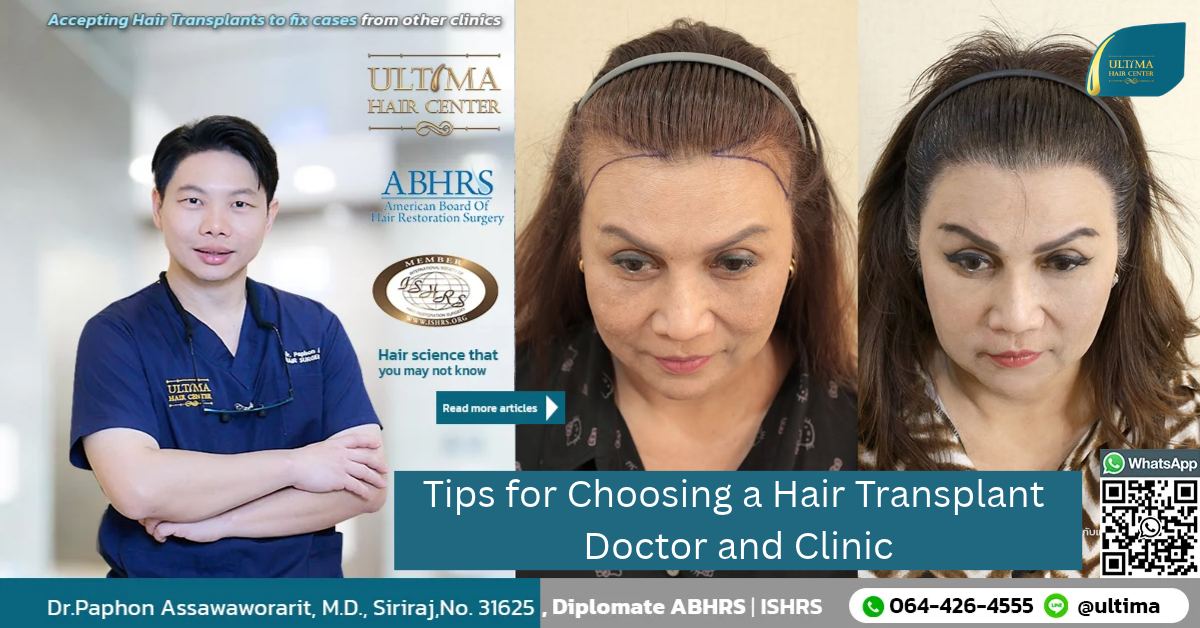
The decision to undergo a hair transplant is something that should be carefully considered and researched. What patients are choosing is not simply a clinic or a price, but also the physician who will evaluate their condition, design the Hairline, manage the Donor area, select the appropriate technique, oversee the surgical process, and provide postoperative follow-up
Today, there are many hair transplant clinics, and each may present information differently, including pricing, graft numbers, techniques, reviews, and promotions. This can leave people who are researching with an important question:
 “How should I choose the right hair transplant doctor and clinic for me?”
The answer may not be the clinic with the most reviews, the lowest price, or the largest number of grafts offered. Instead, patients should consider several factors together and determine whether the treatment approach is appropriate for their individual situation
This article brings together tips for choosing a hair transplant doctor and clinic, from checking physician qualifications and evaluating hair loss to reviewing patient experiences, assessing the Donor area, planning the Hairline, and identifying important questions to ask before making a decision
 1. Start by Choosing the “Hair Transplant Doctor” Before Choosing the Clinic
One of the most important things to consider is who will be responsible for your care
A clinic is the facility, but the physician plays an important role in evaluating the patient's condition, identifying the potential causes of hair loss, developing a treatment plan, and making important decisions regarding the details of the hair transplant
Therefore, if you are comparing several hair transplant clinics in Bangkok, you should not look only at the clinic name or price. You should also research the physician
Questions worth asking include:
- What is the physician's name?
- Does the physician personally evaluate patients?
- What type of Hair Restoration training does the physician have?
- What qualifications or certifications does the physician hold?
- Can the physician's information be independently verified?
- Does the physician develop the hair transplant treatment plan?
- Can patients communicate directly with the physician?
Knowing “who will be taking care of you” is an important starting point and can be more meaningful than choosing based solely on the name of a package
 2. Check the Physician's Qualifications Beyond Marketing Claims
The term “hair transplant doctor” is easy to search for online, but patients should look further and determine what qualifications the physician actually has and whether the information can be independently verified
One type of information that can be considered is certification from professional organizations in Hair Restoration
For the ABHRS, or American Board of Hair Restoration Surgery, the Diplomate certification process includes requirements related to training, post-training experience, and both written and oral examinations in Hair Restoration Surgery
Therefore, if a clinic communicates that patients can undergo a hair transplant with an American Board-certified ABHRS physician, patients can verify the physician's information through the ABHRS Physician Directory rather than relying solely on advertising claims
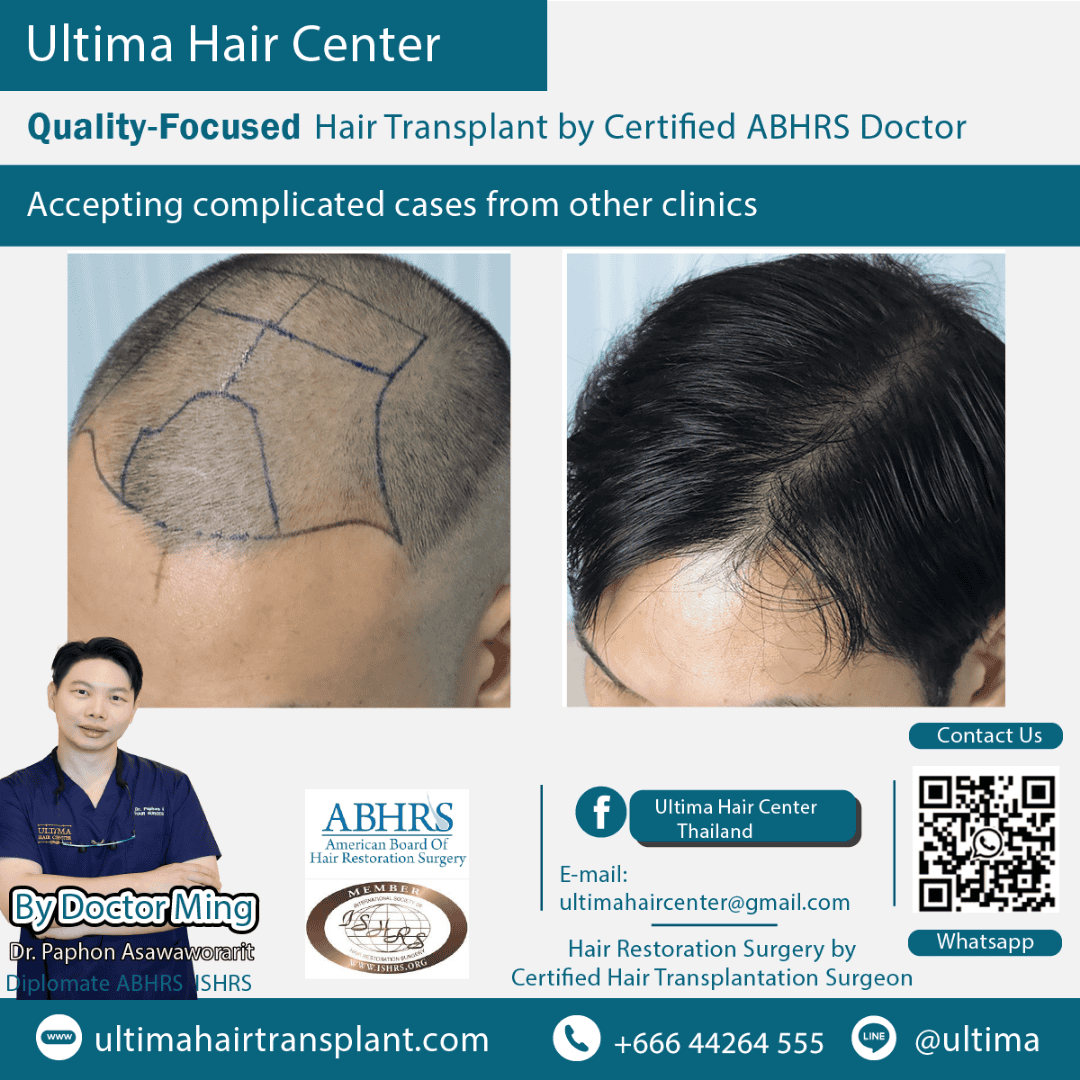
Dr. Paphon Asawaworarit, also known as Dr. Ming, is the physician at Ultima Hair Center and has information listed in the ABHRS Physician Directory, with a Verified status and Certification Year 2019 shown on the profile
Checking information through an independent source is therefore another useful way for patients to make decisions based on verifiable information
 3. Can You Communicate Directly with the Physician?
This is an important question, but it is something patients do not always ask before making a decision
If you are comparing several clinics, you can simply ask:
“Can I communicate directly with the physician?”
Whether before or after a hair transplant, if you have questions or need additional information, can you speak directly with the physician? Or do you need to communicate through an administrator or sales representative who then sends the questions to the doctor? Alternatively, will the administrator or sales representative answer the questions themselves?
This is another factor worth considering when choosing a hair transplant clinic
The answer may help patients better understand how each clinic approaches communication and patient care
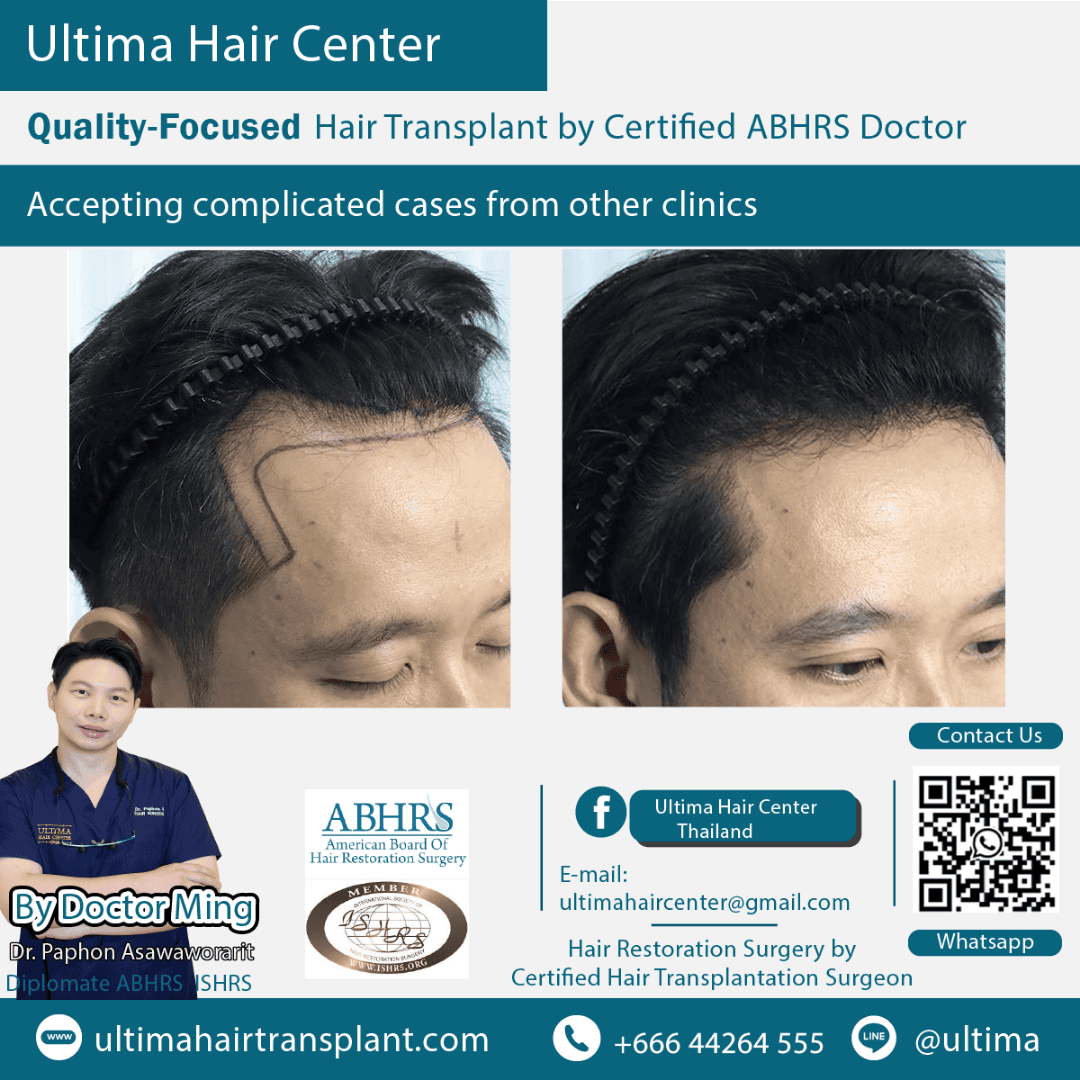 4. Do Not Choose Based on “Graft Count” Alone
Another factor that patients often use when comparing clinics is the number of grafts, such as 2,000, 3,000, or 4,000 grafts
However, graft count alone does not determine whether the treatment plan is appropriate
Each graft does not necessarily contain the same number of hairs, and every patient's hair characteristics are different
Other factors also need to be considered, including:
- The areas that need to be transplanted
- The size of the thinning area
- The density of existing hair
- Hair characteristics
- The number of hairs per graft
- The quality of the Donor area
- Hairline design
- Graft distribution
- Long-term treatment planning
Therefore, quality-focused hair transplantation should not mean trying to use as many grafts as possible. Instead, it should mean using the patient's available hair resources appropriately according to their individual goals
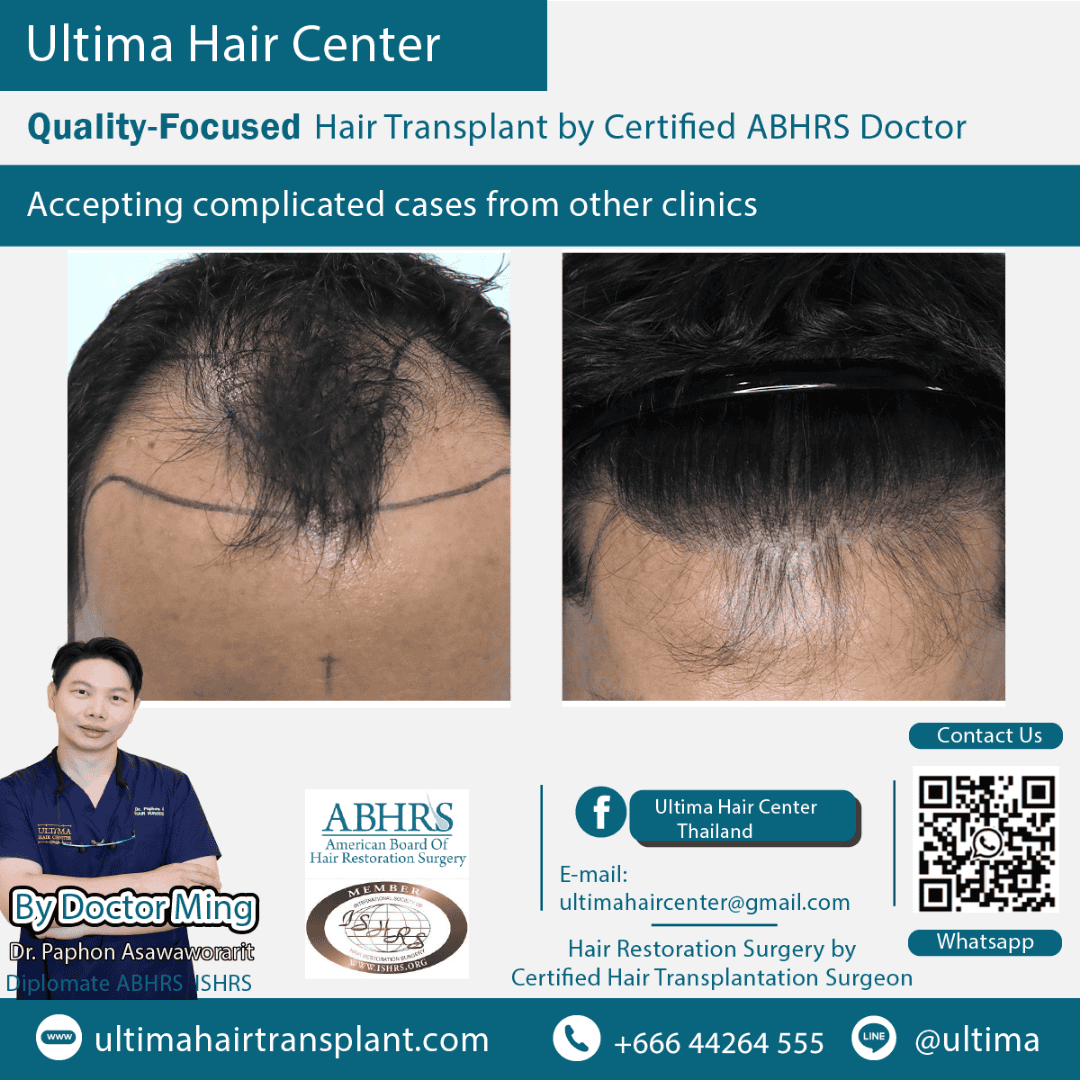 5. Look at How the Physician Evaluates the Donor Area
The Donor area is another highly important factor when choosing a hair transplant clinic
Because the grafts used for transplantation come from this area, treatment planning should not focus only on the thinning areas. It should also evaluate the potential of the Donor area
Important considerations include:
- Hair density
- Hair characteristics
- The number of grafts that may be available for use
- Appropriate locations for graft harvesting
- The effect on the appearance of the Donor area
- Long-term planning
The important point is that the Donor area should not be viewed as an unlimited source of grafts
Therefore, quality-focused hair transplantation should include careful Donor area management from the very first procedure
 6. Look at How the Physician Designs the Hairline
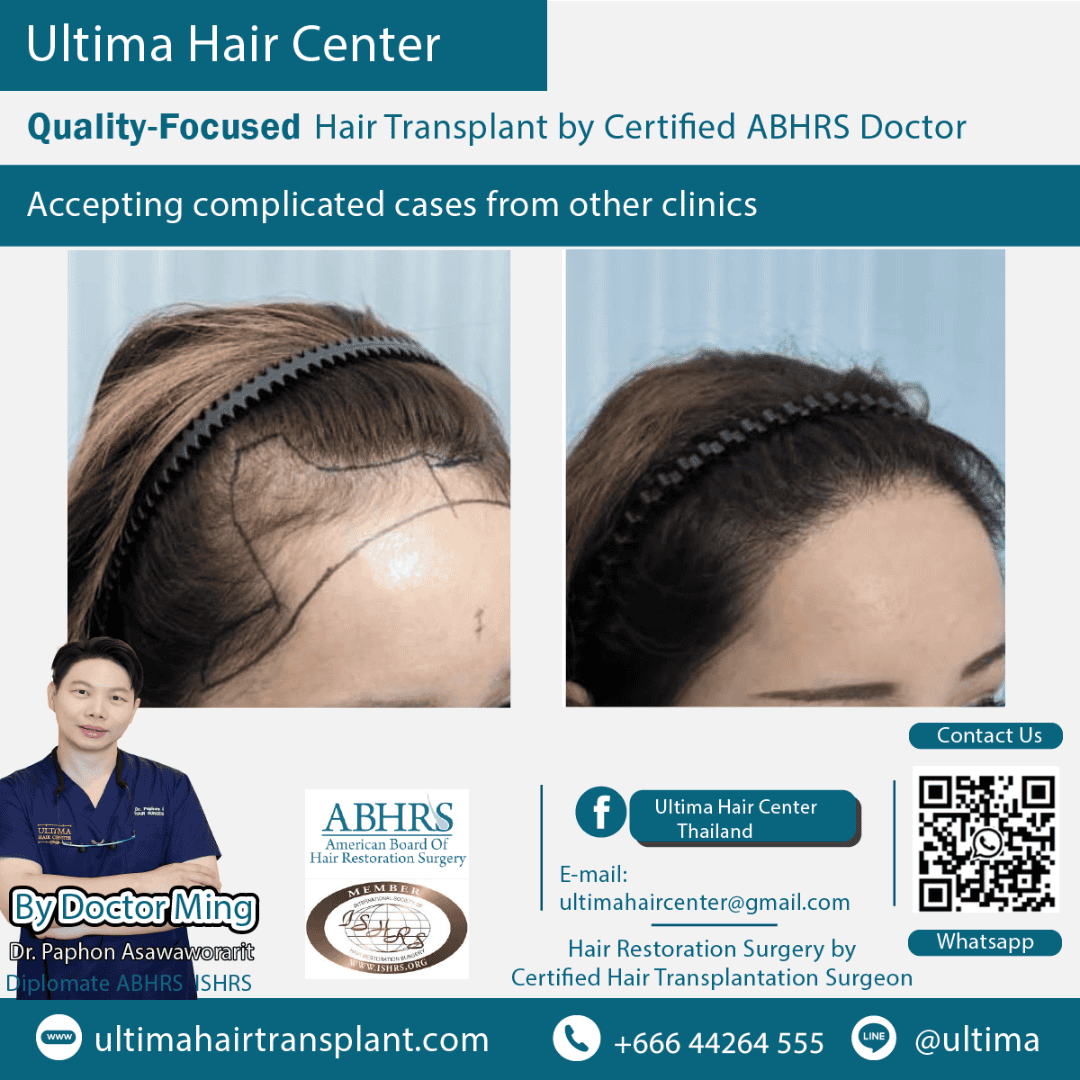
The Hairline is another important element that can affect the overall appearance of the face
Hairlines do not need to look the same for everyone because several factors should be considered, including:
- Age
- Facial structure
- Hair characteristics
- Degree of hair loss
- Available grafts
- Condition of the Donor area
- Potential future changes in the patient's existing hair
Designing a very low Hairline may require more grafts, while a Hairline that is positioned too high may not be appropriate for the facial proportions of some patients
Therefore, the goal of a natural-looking hair transplant should not be to create a Hairline that looks like someone else's. Instead, the Hairline should be designed appropriately for the individual patient
 7. Consider “Long-Term Planning,” Not Just Today's Result
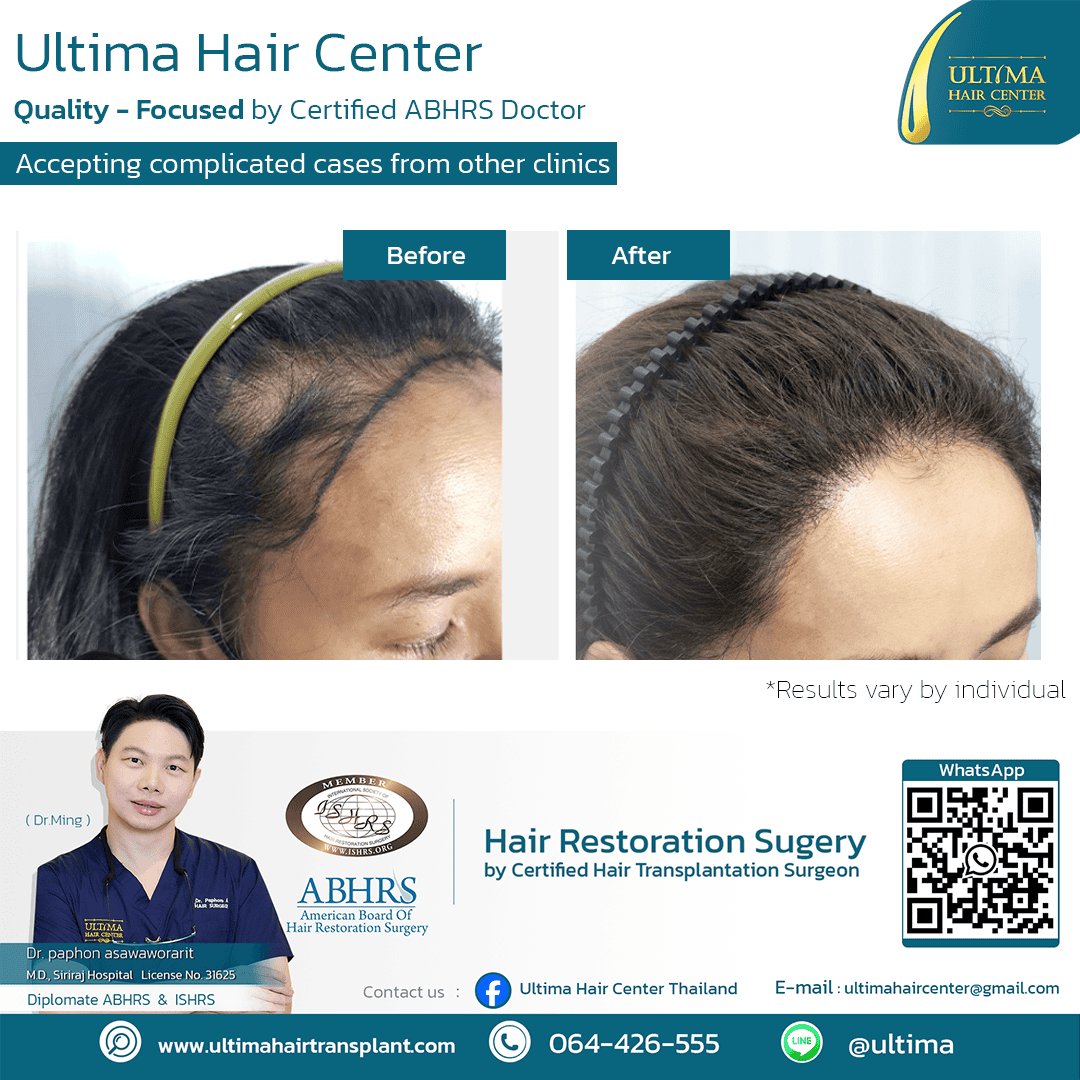
Hair loss caused by genetics or other factors may continue to change over time
Therefore, a hair transplant should not be viewed only in terms of “Where should we transplant today?” Patients should also consider whether the treatment plan will remain appropriate if their existing hair becomes thinner in the future
For example, if a patient has thinning in the frontal area but still has relatively good density in the mid-scalp, the treatment plan should not necessarily focus only on maximizing density at the front
Graft distribution and the use of Donor area resources should also be considered as part of the overall plan
This is one reason why choosing the right physician is important. Hair transplantation involves analysis and planning, not simply moving grafts from one area to another
 8. Look at Hair Transplant Reviews, but Read the “Details” Rather Than Just the Rating
Before choosing a clinic, many patients search for hair transplant reviews on Google, Facebook, YouTube, or TikTok
Reviews can be useful because they provide insight into patient experiences, but they should not be evaluated based solely on star ratings
The U.S. Federal Trade Commission (FTC) advises consumers to consider reviews from multiple sources, look at where reviews come from and who wrote them, consider whether the reviews are recent, and be cautious about unusual patterns such as a large number of reviews appearing within a short period
Therefore, when reading hair transplant reviews, it is useful to look for additional information
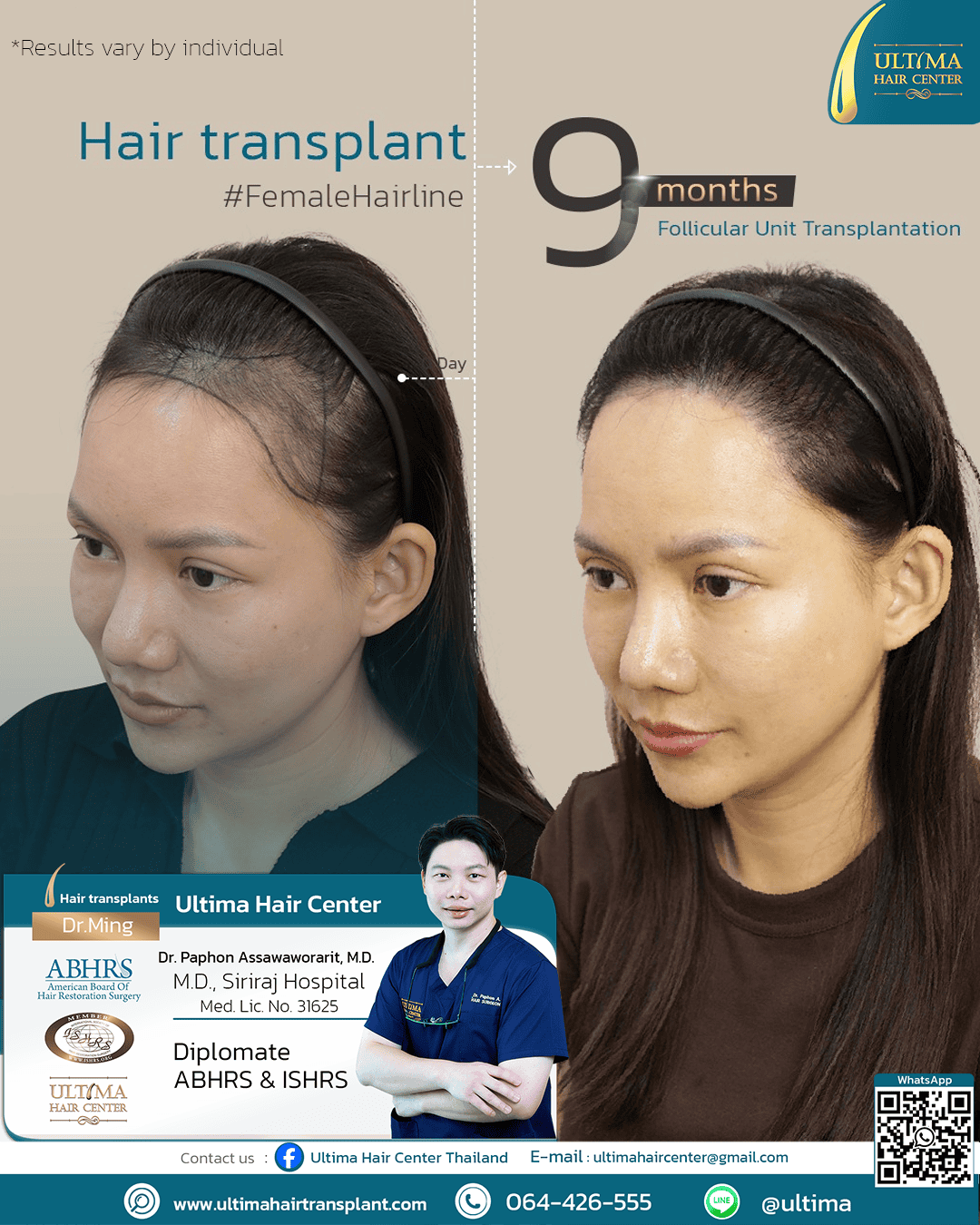
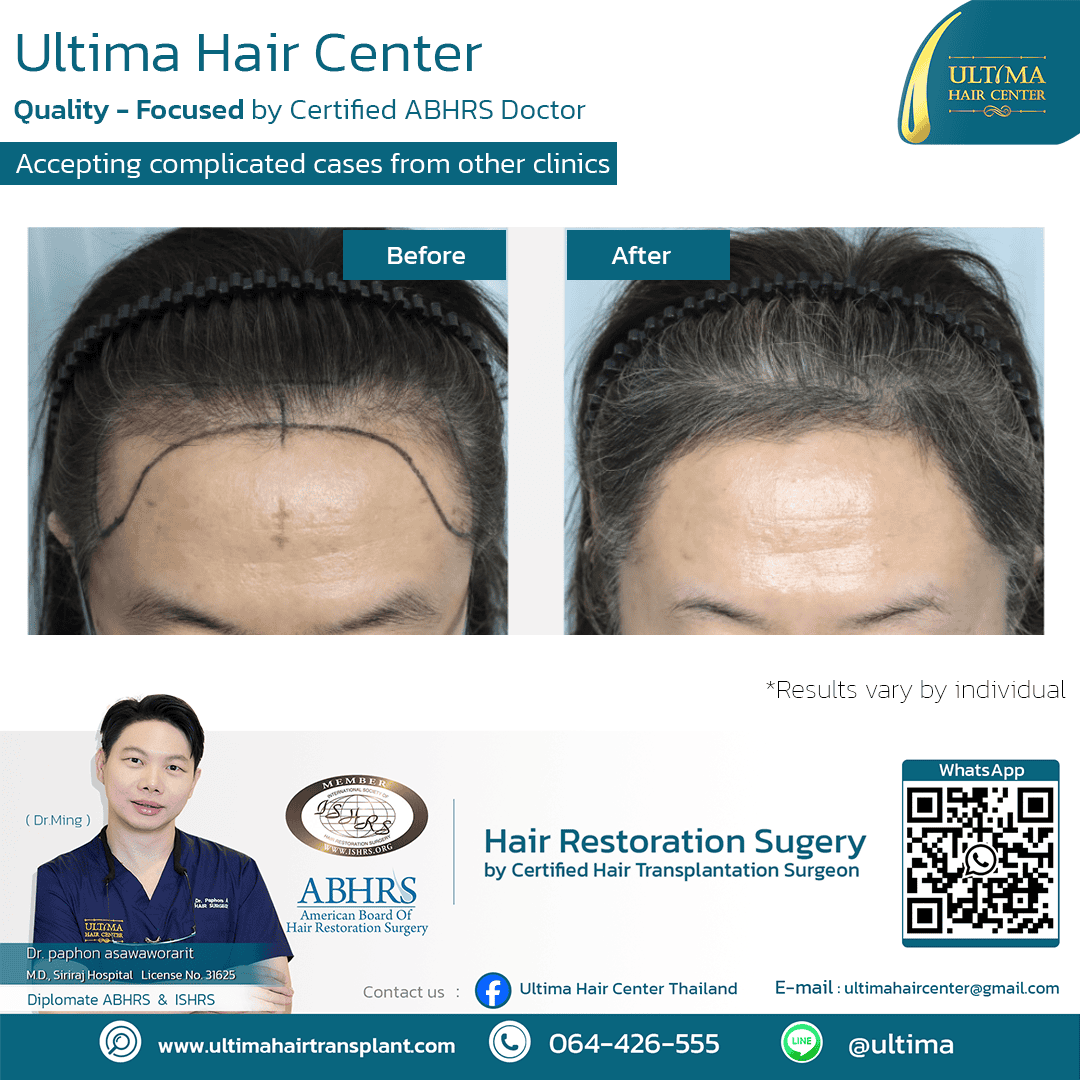
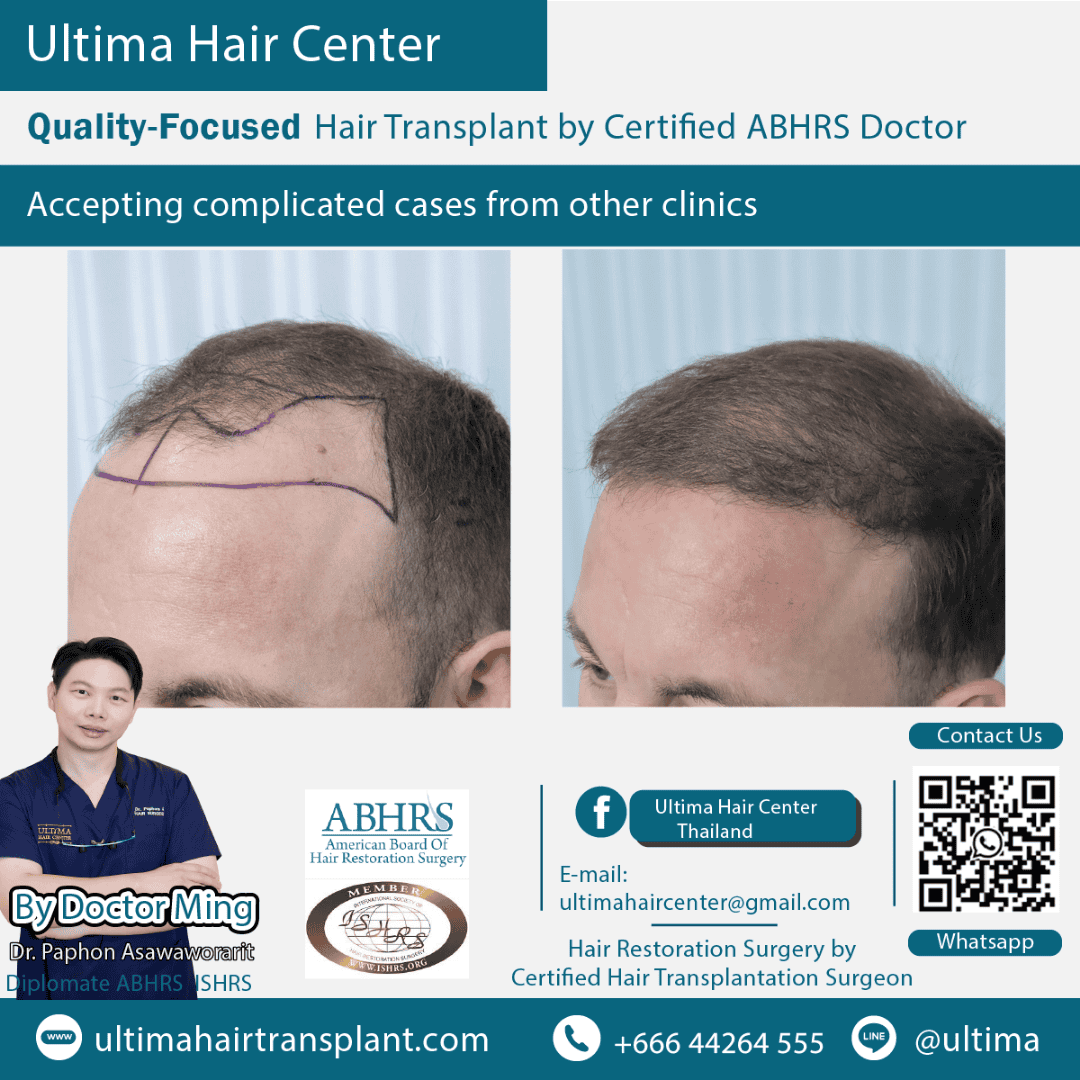
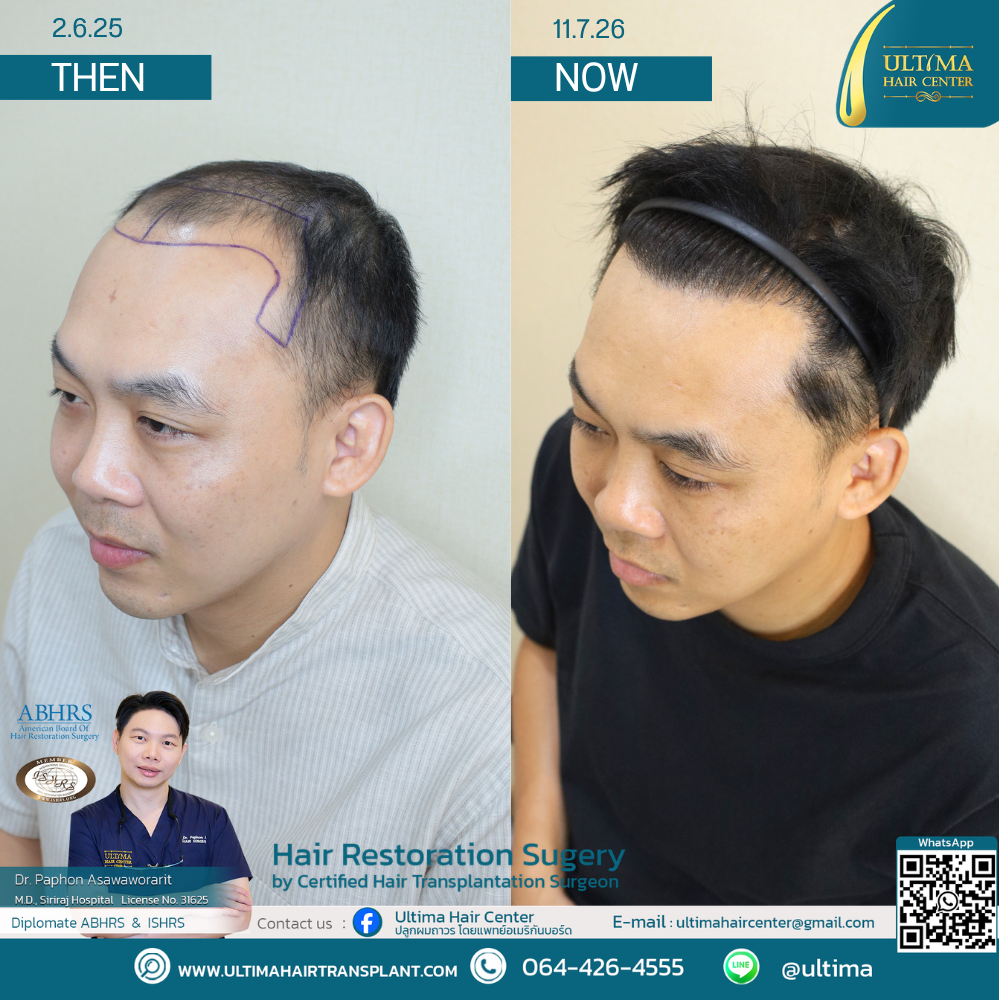
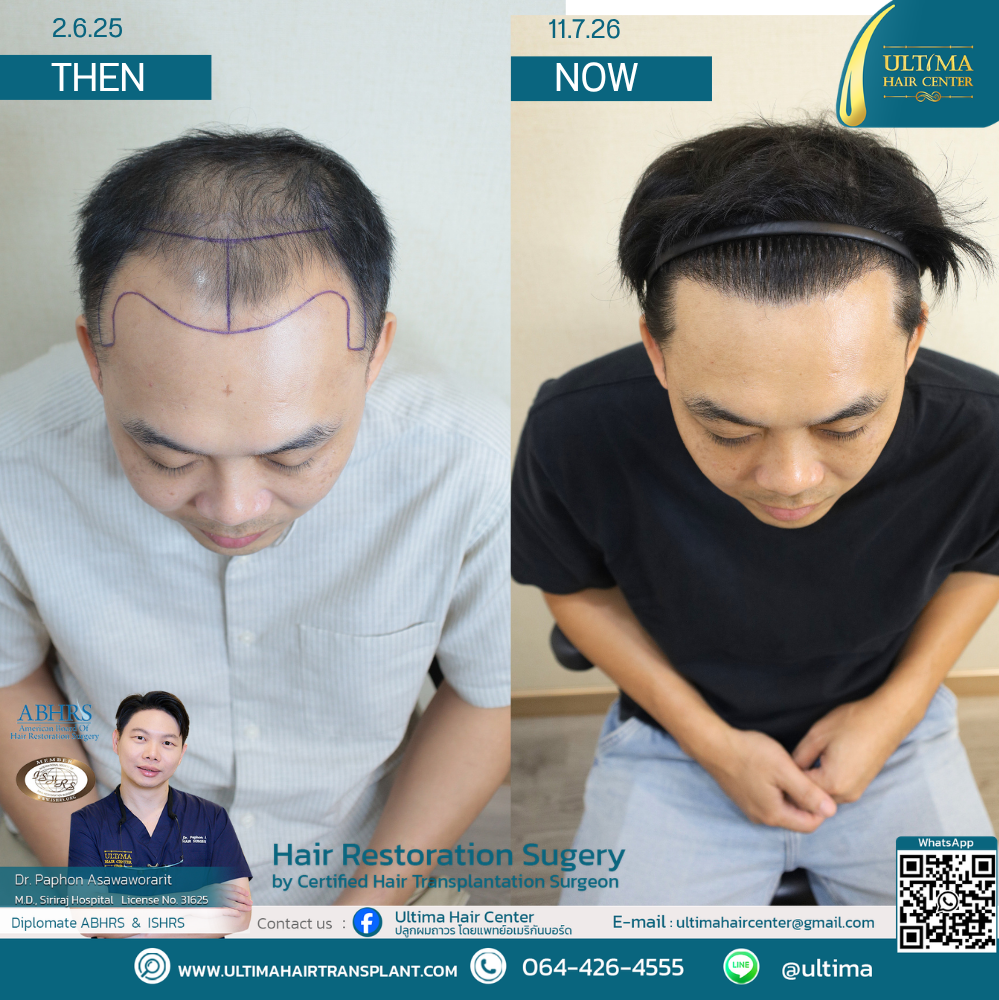
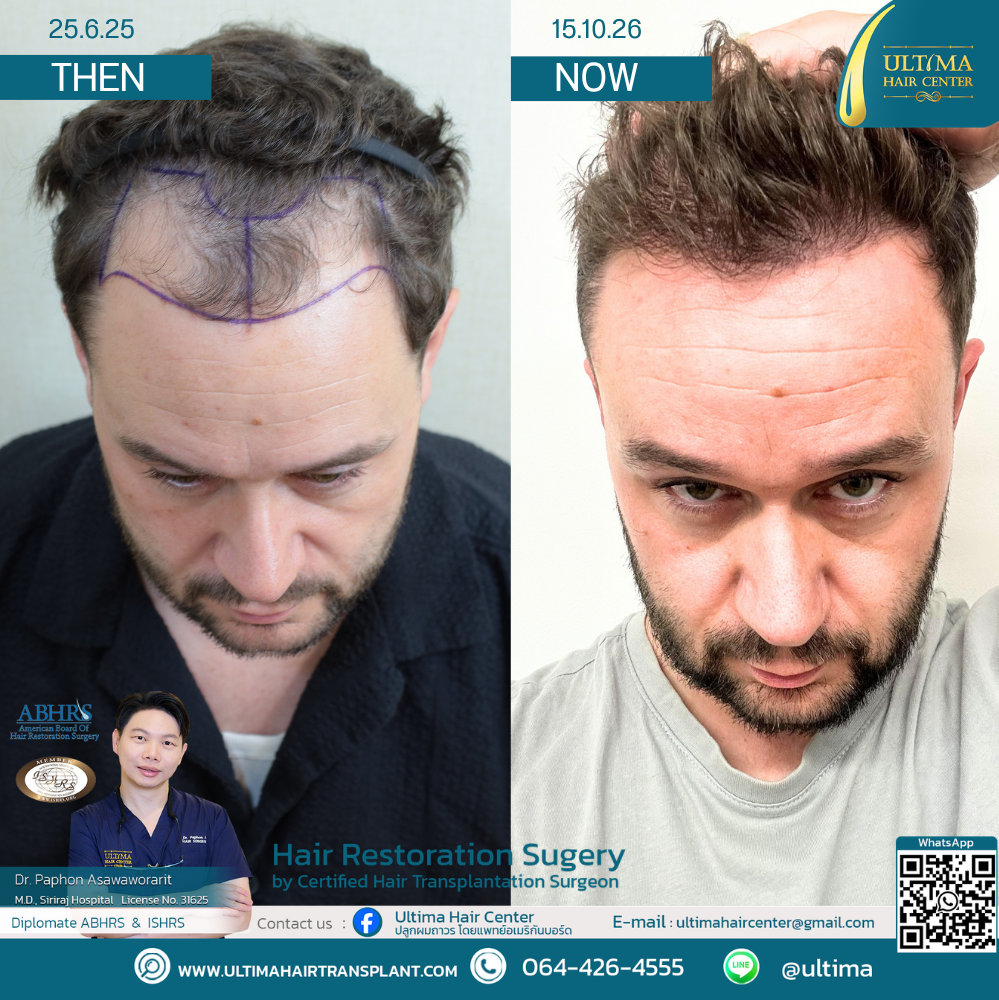
Before & After Photos
The photos should ideally be taken from comparable angles, and patients should consider how long after the procedure the postoperative photographs were taken
Number of Grafts
If the number of grafts is provided, it can be useful information. However, results from patients who received different numbers of grafts should not be compared directly without considering the other factors involved
The Original Hair Loss Pattern
A patient with a receding Hairline may have a very different treatment goal from someone with thinning in the mid-scalp or Crown area
Time Since the Procedure
Early postoperative photographs should not be directly compared with photographs taken many months later without considering the difference in timing
Donor Area
Patients should look at both the transplanted area and the area from which the grafts were harvested, rather than focusing only on the front of the scalp
 9. Do Not Assume Every Review Has the Same Evidentiary Value
Having a large number of reviews does not necessarily mean that every review provides information of equal value
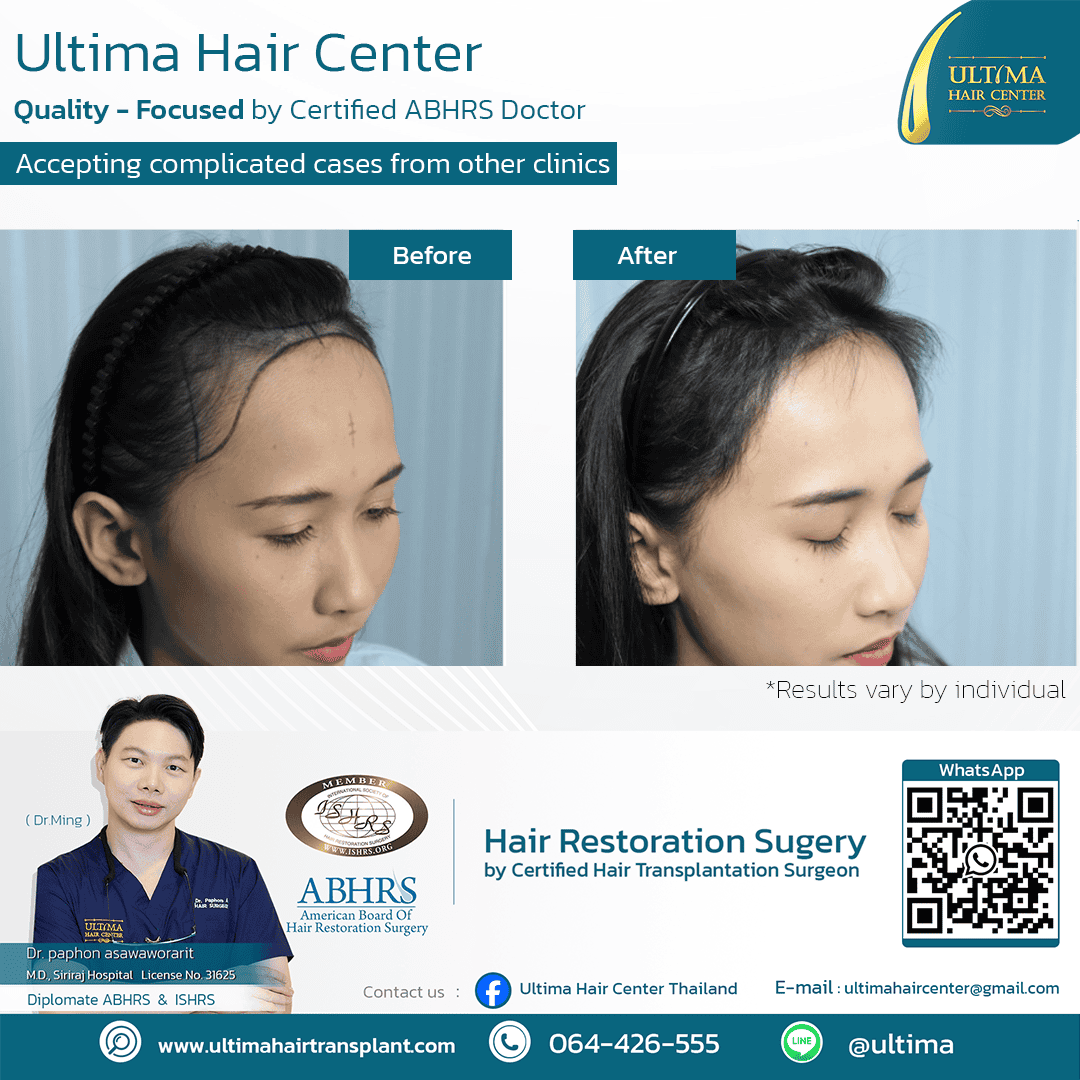
Some reviews may provide detailed information, such as the patient's condition before surgery, the number of grafts, the technique used, the follow-up period, and photographs from multiple angles
Other reviews may contain only short statements such as “great service” or “the doctor was very friendly”
Both types of reviews may have value in different ways, but they should not be treated as equivalent sources of medical information
If you want to evaluate hair transplant results, it is better to consider actual case photographs and treatment information together with a consultation with the physician
 10. Compare Reviews from Multiple Sources
Another tip for choosing a hair transplant doctor and clinic is not to rely only on reviews published on the clinic's own website
You may research information from several sources, such as:
- YouTube
- TikTok
- The clinic's website
- Professional organizations
- Physician qualification databases
The FTC also recommends considering reviews from multiple sources rather than relying solely on star ratings
However, reviews from different platforms should not be treated as direct medical evidence because every patient's experience is different
The best approach is to use reviews as supporting information, then take the questions raised by those reviews and discuss them with the physician
 11. Be Careful When Comparing Price Per Graft Alone
Price is an important part of financial planning, but comparing clinics based only on “price per graft” may not reflect the complete treatment process
Before comparing prices, patients should ask what is included, such as:
- Physician evaluation
- Hairline design
- Surgical procedure
- Follow-up care
- Medication or postoperative products
- Postoperative care
- Additional costs that may arise
The more important point is to understand exactly what the quoted package or price includes
 12. Understand the Technique Before Choosing It
There are now many terms used in hair transplantation, including FUE, FUT, DHI, and Long Hair. This can sometimes lead patients to assume that a technique with a more specialized name must automatically be better
However, the more important question is:
“Why is this technique appropriate for me?”
For example, FUE, or Follicular Unit Excision, is one approach to harvesting grafts from the Donor area, while FUT is another approach with different characteristics and considerations
Regarding DHI, patients should understand that ISHRS does not identify DHI as one of the primary hair transplant surgical methods. The term is sometimes used to describe a particular approach to graft placement or the use of an implanter in certain settings
Therefore, do not choose a procedure based solely on the name of the technique. Ask the physician to explain why the proposed approach is appropriate for your hair characteristics and treatment goals
 13. Choose a Clinic Where the Physician Can Explain the “Limitations” as Well
It is easy to talk about the benefits of a procedure, but explaining its limitations is equally important
Before undergoing a hair transplant, patients should receive answers to questions such as:
- Is the Donor area sufficient?
- Which area should be treated first?
- How much additional density can realistically be achieved?
- Is the desired Hairline appropriate for the available grafts?
- Is there a possibility that existing hair will continue to thin?
- How long should the patient wait before evaluating the result?
- What risks or limitations should the patient understand?
A physician who provides information about benefits, limitations, and alternatives can help patients establish more realistic expectations
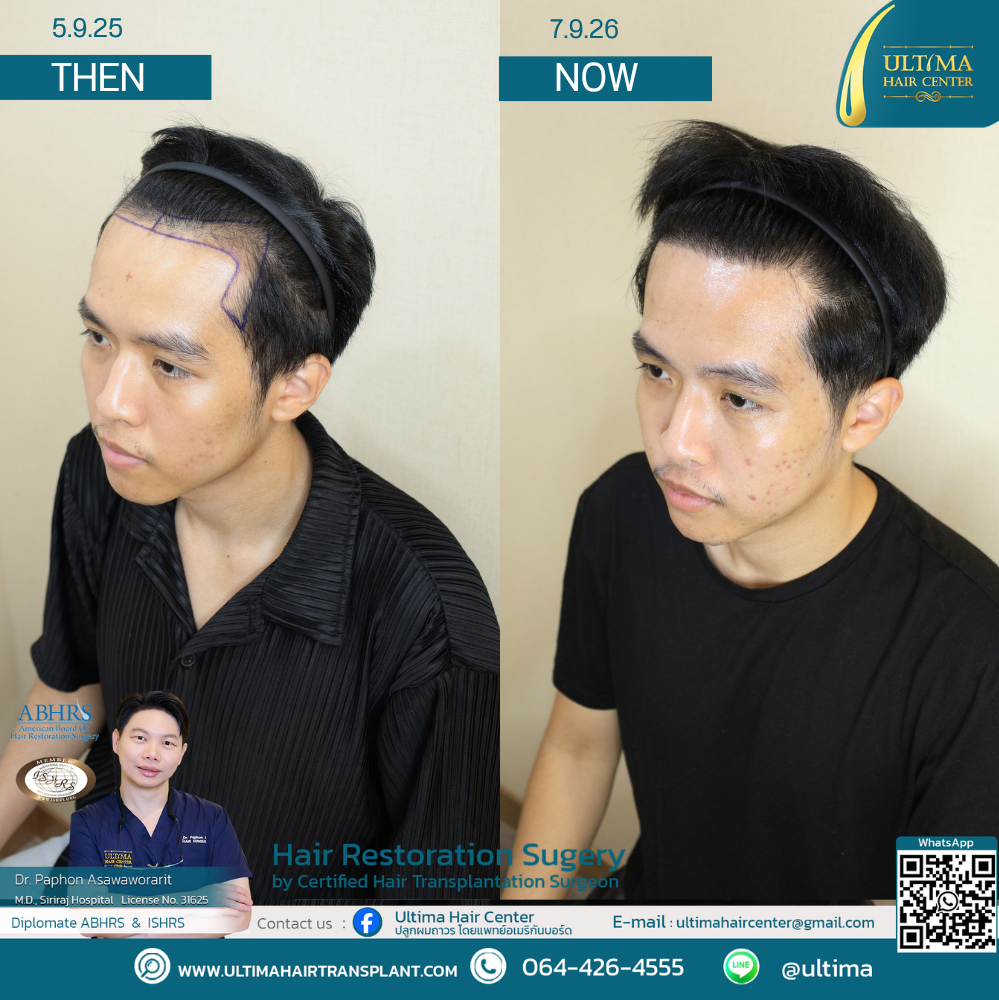 14. Pay Attention to Whether the Physician Listens to Your Goals
Every patient has different goals
Some people want to address Hairline recession. Others want to increase density, reduce the visibility of the scalp, or address problems from a previous hair transplant
Therefore, choosing a physician should also involve considering whether the doctor listens to your goals and explains realistically what can and cannot be achieved
A good hair transplant should not involve applying the same formula to every patient
Instead, information about each individual patient should be evaluated and used to develop an appropriate treatment approach
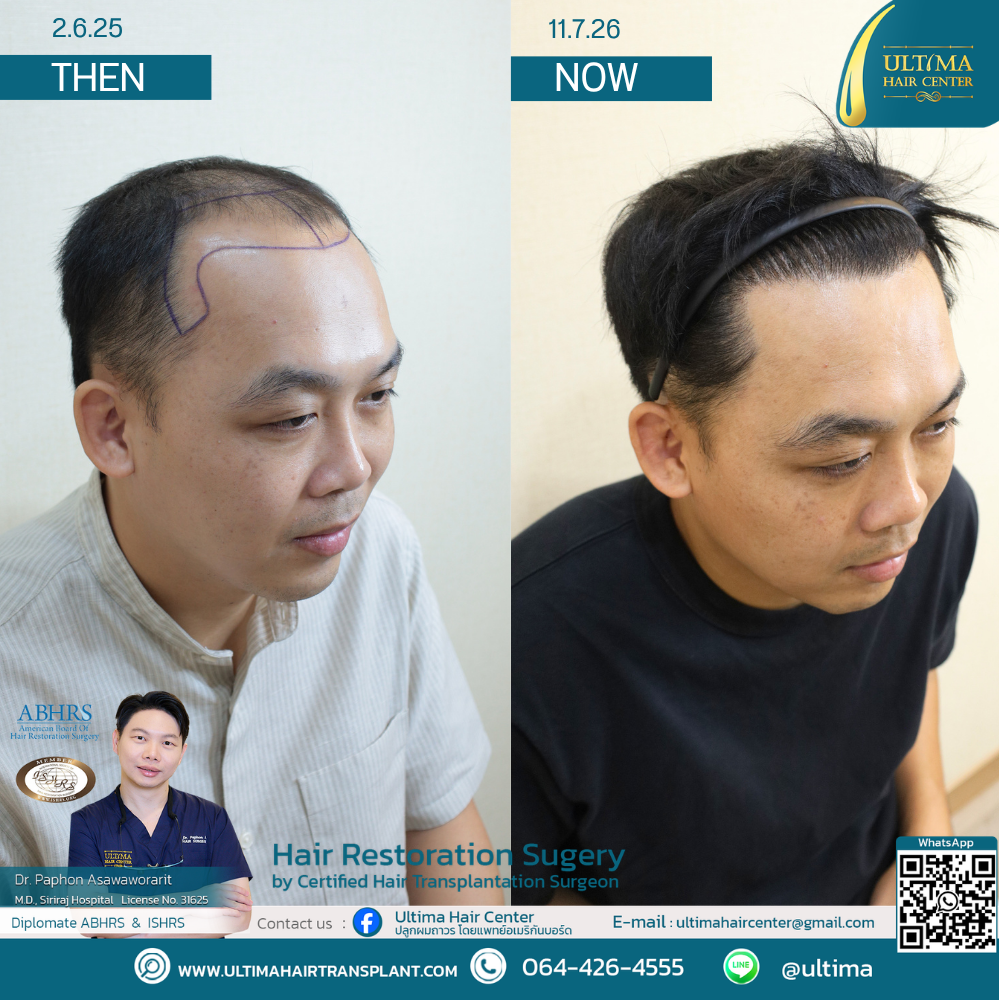 15. Direct Communication with the Physician Before Deciding Can Be Valuable
For people searching for a hair transplant clinic in Bangkok, another factor worth considering is how patients can communicate with the physician
At Ultima Hair Center, importance is placed on communication between the physician and patient, with Dr. Ming personally responding to patient messages so patients can ask questions directly during the initial stage
Patients can undergo a hair transplant with Dr. Ming or consult with him regarding their hair loss concerns and questions before making a decision
Initial communication does not mean that every aspect of a medical condition can be diagnosed through chat. A proper evaluation still requires examination and assessment of the patient's hair and scalp. However, an initial discussion can help patients prepare and better understand what questions they should ask the physician
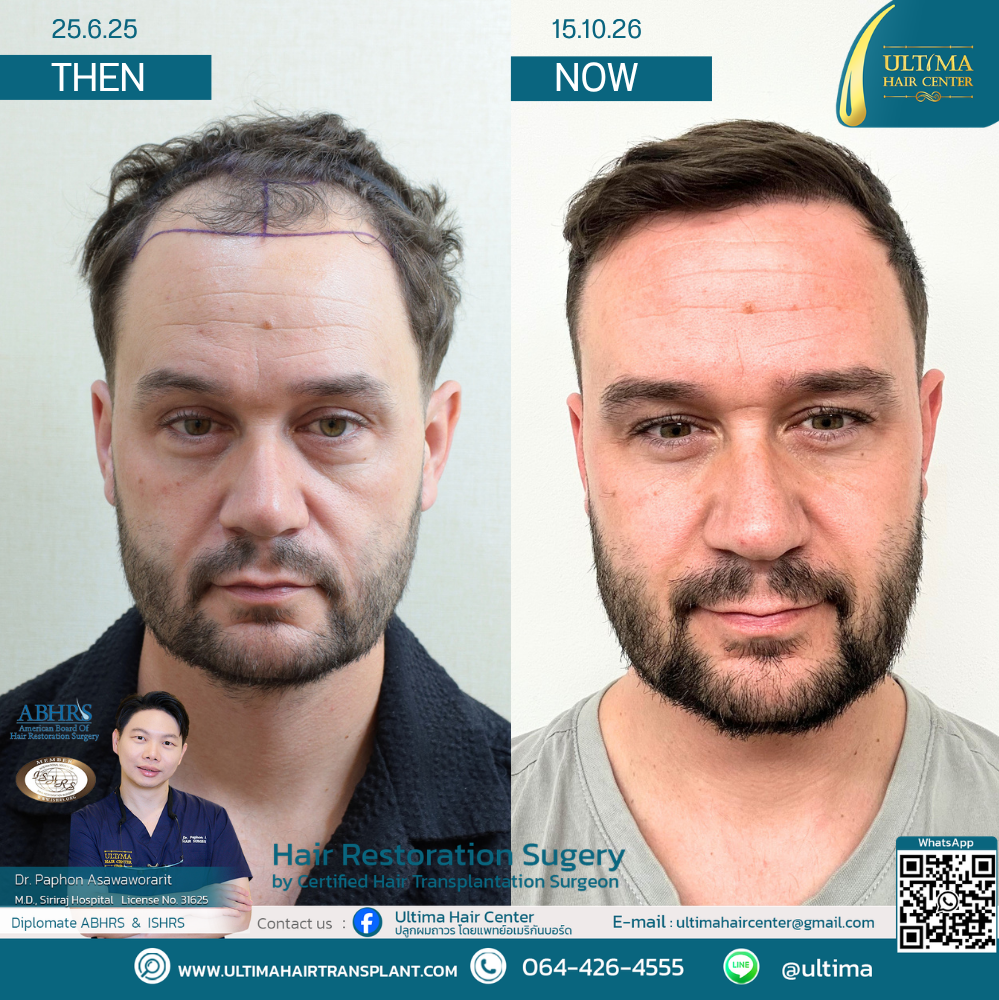 16. Choose a Clinic That Prioritizes the “Quality of Treatment Planning”
The concept of quality-focused hair transplantation should not refer only to advanced equipment or a high number of grafts
Instead, it should be considered from beginning to end
From:
Evaluation → Diagnosis → Planning → Design → Graft Harvesting → Graft Preparation → Transplantation → Postoperative Care → Follow-Up
Each stage can contribute to the overall outcome
Therefore, before choosing a clinic, consider how much attention is given to this complete process rather than focusing only on Before & After photographs or promotions
 17. If Your Goal Is a Natural-Looking Hair Transplant, What Should You Ask?
Many patients do not simply want “more hair.” They want the overall result to blend appropriately with their existing hair
If your goal is a natural-looking hair transplant, ask the physician about:
- Hairline design
- Graft selection
- Hair direction
- Hair angle
- Density
- Graft distribution
- Transition at the Hairline
- Donor area management
The word “natural” therefore does not depend on graft count alone
It is the result of multiple details working together
 18. Look at Postoperative Care as Well
Before choosing a clinic, do not forget to ask how postoperative follow-up is handled
Hair transplantation does not end immediately when the patient leaves the operating room
Patients should understand:
- How to care for the scalp after the procedure
- What to avoid during the early recovery period
- When they can return to work or exercise
- How to wash the hair
- Who to contact if a concern develops after surgery
- Whether follow-up appointments are provided
- When the result should be evaluated
Having a clear communication channel after treatment is therefore another factor that should be considered when choosing a clinic
 19. If You Have Had a Previous Hair Transplant, Choosing the Right Physician Becomes Even More Important
People searching for a hair transplant clinic in Bangkok are not necessarily all first-time patients
Some have already undergone hair transplantation elsewhere and are looking for a revision consultation because of concerns such as:
- An unsuitable Hairline
- Insufficient density
- Graft distribution that does not meet expectations
- A Donor area that has already been used
- A desire to increase density
- A need to determine what can realistically be corrected
These cases should not be judged simply by asking, “How many more grafts do I need?”
The existing grafts, Donor area, native hair, and previously transplanted areas should all be assessed
Revision planning should therefore begin with an evaluation of the existing limitations


Comments
Post a Comment