Hair Growth Serum: Does It Really Exist? How Much Can It Help With Hair Loss and How Should You Choose One? (ok)
Hair Growth Serum: Does It Really Exist?
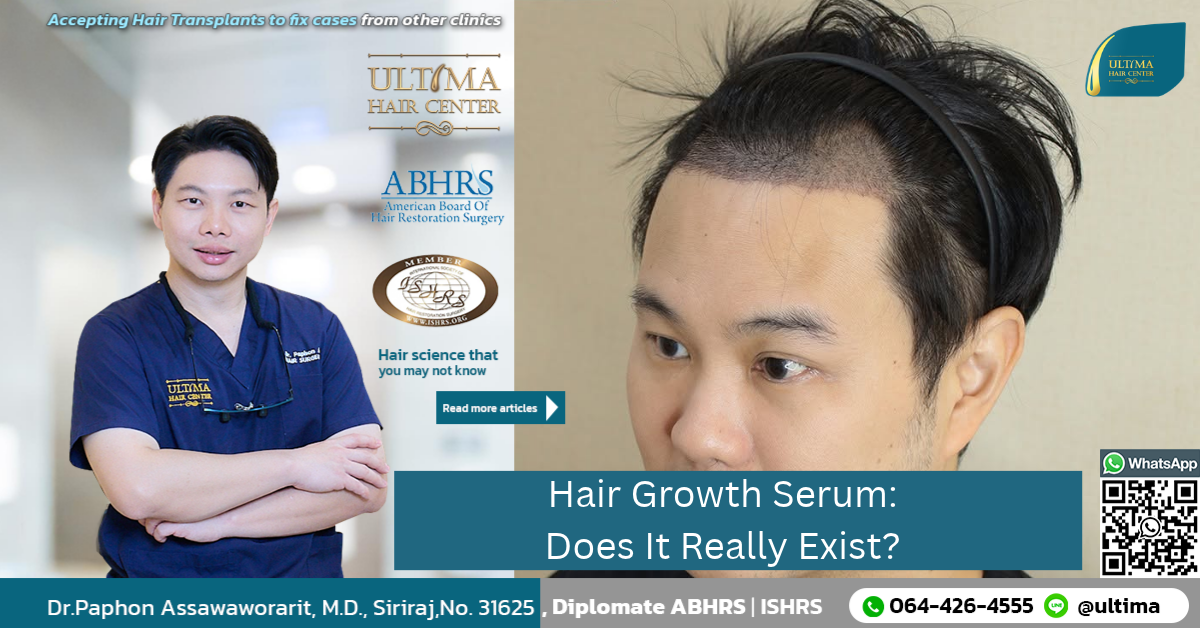
How Much Can It Help With Hair Loss and How Should You Choose One?
Does Hair Growth Serum Really Exist?
The term hair growth serum is widely used today. There are many types of products advertised as helping to reduce hair loss, nourish hair roots, stimulate hair growth, or make the hair look thicker. This naturally leads many people to wonder whether these products can actually “grow hair” or not
The answer is that there are serum-form products that are genuinely used for hair loss, but they do not increase the number of hairs in the same way as a hair transplant. It is important to distinguish what ingredients a serum contains and how much medical evidence supports its effectiveness
The word “serum” describes a product format rather than a specific medical treatment. Some serums are hair or scalp care products containing ingredients such as plant extracts, vitamins, moisturizing agents, or other compounds. Other products may be formulated as a serum or solution but contain active medications with clinical evidence, such as Minoxidil
For example, the FDA product database includes products using the term “Hair Growth Serum” that actually contain Minoxidil as an active ingredient. Therefore, simply seeing the term “hair growth serum” on a label does not provide enough information to determine how effective the product may be
Therefore, before purchasing a hair growth serum, what matters more than the product name is understanding what ingredients it contains, what it is intended to do, whether there is medical evidence supporting it, and whether it is appropriate for the underlying cause of hair loss
 How Is Hair Growth Serum Different From a Hair Transplant?
The term “hair growth serum” can sometimes create the impression that it is a product capable of creating new hair in the same way as a hair transplant. In medical terms, however, these are two different approaches
A serum is a product applied to the scalp, and the expected effects depend on its ingredients and the evidence supporting the product
A hair transplant, on the other hand, is a procedure in which hair grafts are taken from the Donor area and transplanted into areas affected by hair thinning. This requires evaluation of the patient's hair condition and planning of the Hairline, recipient areas, and number of grafts according to each individual
Therefore, if a product is marketed as a “hair growth serum,” it should not be interpreted as being capable of replacing a hair transplant, because it does not increase the number of hairs in the same way as transplantation
At the same time, people with early-stage hair thinning may have several treatment and hair-care options available and do not necessarily need to begin with a hair transplant
 What Types of Hair Growth Serums Are Available?
Based on their ingredients and the level of supporting evidence, products in this category can be broadly considered in several groups
1. Scalp and Hair Care Serums
These serums generally focus on caring for the scalp, reducing dryness, or improving the appearance and condition of the hair. The ingredients can vary significantly between products
These products can be part of a general hair-care routine, but the product name alone should not be interpreted as evidence that the serum can treat androgenetic hair loss
2. Serums Containing Active Medications
One example with stronger clinical evidence than general hair-care products is Minoxidil
Topical Minoxidil is one of the medications used to treat androgenetic hair loss, and products in solution or serum-like formulations are available. The FDA has information on Minoxidil products at both 2% and 5% concentrations intended for use on the scalp
The American Academy of Dermatology states that topical Minoxidil can help reduce hair loss, stimulate hair growth, and strengthen existing hair in appropriate patients. However, this does not mean that everyone will respond in the same way or that Minoxidil can restore hair to its original density in every case
 What Is Minoxidil and How Is It Related to Hair Growth Serum?
Minoxidil has more evidence for use in the treatment of androgenetic hair loss, or Androgenetic Alopecia, than many general hair-care ingredients
Systematic reviews and meta-analyses have found that topical Minoxidil is more effective than placebo for treating hair loss in people with Androgenetic Alopecia, although visible results do not occur equally in everyone and continued use is an important factor in maintaining treatment effects
Another systematic review that included multiple studies found that topical Minoxidil can be effective in treating androgenetic hair loss in both men and women, although individual responses vary
Therefore, it can be said that a serum containing Minoxidil as an active ingredient has stronger supporting evidence than a serum that relies primarily on claims about “nourishing” ingredients
However, Minoxidil is a medication rather than simply a general cosmetic hair-care product. Its use should therefore take into account the indication, directions for use, and precautions associated with the specific product
 Can Hair Growth Serum Without Minoxidil Be Used?
It can be used as part of scalp and hair care, but it is important to manage expectations
Products without Minoxidil may contain various ingredients such as plant extracts, vitamins, peptides, caffeine, or other compounds that manufacturers claim may contribute to hair health
However, the presence of a particular ingredient in a product does not necessarily mean that applying it to the scalp will produce results equivalent to a medication that has been clinically studied
Reviews of treatments for Androgenetic Alopecia have found that many treatment approaches and ingredients are being studied, but the level of evidence varies, and treatment should be considered on an individual basis
Therefore, if a product claims that it can “help hair grow,” it is important to look further and ask:
- Has it been studied in humans?
- How many participants were included in the study?
- Was it compared with a placebo?
- How was the outcome measured?
- How long was the treatment used?
- Did the study demonstrate an actual increase in hair count, or simply make the hair appear thicker?
- Was the evidence based on the “active ingredient” or on the finished product itself?
These questions are more important than simply looking for the words “Hair Growth” on the label
 Can Hair Growth Serum Help With All Types of Hair Loss?
No
The term hair loss covers a wide range of conditions because hair loss can have many different causes, including:
- Androgenetic Alopecia
- Telogen Effluvium
- Alopecia Areata
- Scalp disease or inflammation
- Certain nutritional deficiencies
- Thyroid disorders
- Hormonal changes
- Certain medications
- Traction on the hair
- Certain hair-care practices
Therefore, a serum that may be useful for one condition may not address another
For example, if a patient has Telogen Effluvium following illness or significant stress, addressing the triggering factors may be more important than purchasing multiple hair-care products
In contrast, a person with Androgenetic Alopecia may have different treatment options
Understanding the cause of hair loss is more important than choosing a serum based on advertising claims
Can Hair Growth Serum Help With Androgenetic Hair Loss?
This depends on the type of serum
If the product contains Minoxidil and is used for an appropriate indication, clinical evidence supports the use of Minoxidil to help reduce hair loss and promote hair growth in people with Androgenetic Alopecia
However, if the product is a cosmetic serum containing various plant extracts or other ingredients, it should not automatically be considered equivalent to Minoxidil
In addition, although Minoxidil can help some people achieve increased hair growth, results vary from person to person, and it does not mean that every degree of hair thinning can be corrected
The American Academy of Dermatology notes that some people respond better to Minoxidil than others, and it may take approximately 6–12 months before the results can be assessed more clearly
 Does Hair Growth Serum Really Make Hair Grow Quickly?
It is important to be cautious about products suggesting that hair will grow rapidly within a few days or weeks
The hair-growth cycle is a biological process that takes time. As a result, treatment for hair thinning generally needs to be monitored over a period of several months
For Minoxidil, noticeable results may require approximately 6–12 months in people who respond to treatment
Therefore, using a serum for only a few weeks and then concluding that it “works” or “does not work” may be premature
Taking photographs under similar lighting and from similar angles at regular intervals may provide a better way to observe changes than simply checking the hair in the mirror every day
 Does Hair Growth Serum Make Hair Thicker or Create New Hair?
These are not the same thing
Some products may improve the condition of the hair shaft, make the hair easier to style, or coat the hair so that it appears thicker. These are primarily cosmetic effects
Treatment for hair thinning, on the other hand, may aim to increase the number or thickness of actively growing hairs
Therefore, when evaluating claims made about a hair growth serum, it is important to understand what the stated “result” actually means
The statement
“Hair looks thicker”
does not necessarily mean
“The number of hairs has increased”
Likewise, the claim
“Reduces hair breakage and shedding”
does not necessarily mean
“Treats androgenetic hair loss”
Understanding these distinctions can help consumers develop more realistic expectations about hair-care products and treatments
 What Should You Do If Your Hair Is Still Falling Out After Using a Serum?
If hair loss continues despite using a hair-care product, it is not advisable to keep switching from one serum to another without first investigating the underlying cause
Several factors should be considered
1. What type of hair loss are you experiencing?
Is the hair loss diffuse across the scalp, or is thinning concentrated around the Hairline, temples, and crown?
2. How long has the hair loss been occurring?
Temporary hair shedding and androgenetic hair loss may have different patterns and timelines
3. Are there any triggering factors?
These may include significant stress, insufficient sleep, illness, rapid weight loss, or changes in medication
4. Are there any scalp symptoms?
For example, itching, redness, burning, scaling, or patchy hair loss
5. Is there a possibility of genetic hair loss?
If the Hairline is gradually receding, the temples are becoming thinner, or the crown is progressively losing density, further evaluation for Androgenetic Alopecia may be appropriate
 How Is Hair Growth Serum Different From a Hair Transplant?
People searching for a hair transplant with Dr. Ming or researching hair transplantation may come across many recommendations involving serums, medications, and hair-care products
The important point is to understand that each treatment has a different purpose
Serums or medications may be used to care for or treat existing hair, particularly in people with early-stage hair thinning who have an appropriate indication for treatment
A hair transplant, on the other hand, involves taking hair grafts from the Donor area and transplanting them into areas affected by hair thinning. The patient's suitability for the procedure should be assessed first
Therefore, undergoing a hair transplant does not necessarily mean that all other treatments must be stopped. In some cases, a physician may consider combining different approaches according to the cause of hair loss and the individual's treatment goals
Reviews of treatments for Androgenetic Alopecia include medications, procedural treatments, and hair transplantation, and the most appropriate approach should be tailored to each individual
 Is Hair Growth Serum Necessary After a Hair Transplant?
Not everyone needs to use the same type of product after a hair transplant
After transplantation, postoperative care may vary according to the condition of the scalp, the transplantation technique, the number of grafts, and the patient's existing hair characteristics
Some patients may receive recommendations regarding medications or products for maintaining their existing hair, while others may not have an indication to use certain products
The important point is that you should not apply any serum or other product to a recently transplanted area without knowing whether it is appropriate for that stage of postoperative healing
Particularly during the early period after a hair transplant, patients should follow the postoperative instructions provided by their treating physician
 How Should You Choose a Hair Growth Serum?
If you are considering a product for hair and scalp care, do not simply look for the words “hair growth” or “hair transplant” on the label. At least seven factors should be considered
1. Check the active ingredients
Find out what the product contains and whether those ingredients have medical evidence supporting their use
2. Distinguish cosmetics from medications
A general hair-care serum and a product containing an active medication should not be compared using exactly the same criteria
3. Do not rely on reviews alone
User reviews can provide insight into individual experiences, but they cannot confirm that the product will produce the same results for everyone
4. Look for human clinical evidence
If a manufacturer claims that its product promotes hair growth, check whether the product itself has actually been studied in clinical trials
5. Do not expect results too quickly
Changes in hair growth take time, so treatment outcomes should be assessed systematically
6. Consider whether it matches the cause of hair loss
A serum designed for dry hair may not be appropriate for androgenetic hair loss, and a product that may be useful for one condition may not treat another
7. If hair thinning is progressing, evaluate the cause
Do not continue using products for a prolonged period without evaluation if hair loss or hair thinning continues to progress
 Can Hair Growth Serum Replace a Hair Transplant?
When androgenetic hair loss has progressed to the point where there are clearly visible areas of reduced density, serums or medications may help care for existing hair or increase hair shaft thickness, which may make the hair appear fuller in some cases. However, they do not increase the number of hairs in the same way as a hair transplant
Therefore, a serum cannot simply bring hair grafts back into an area where density has already been lost in the same way that hair transplantation can
A hair transplant is therefore a different treatment approach from using a serum
However, not everyone with hair thinning needs a hair transplant. The decision should depend on the cause of hair loss, the degree of thinning, the patient's goals, and the quality of the Donor area
This is why an appropriate evaluation before treatment is more important than simply asking, “How many grafts do I need?” or “Which serum should I use?”
 How Should You Evaluate Hair Transplant Reviews or Hair Growth Serum Reviews?
People researching hair transplant reviews or reviews of hair-care products should distinguish between an individual's personal experience and medical evidence
One person may report that a product improved their hair, but that alone cannot establish which ingredient caused the result or whether other factors contributed
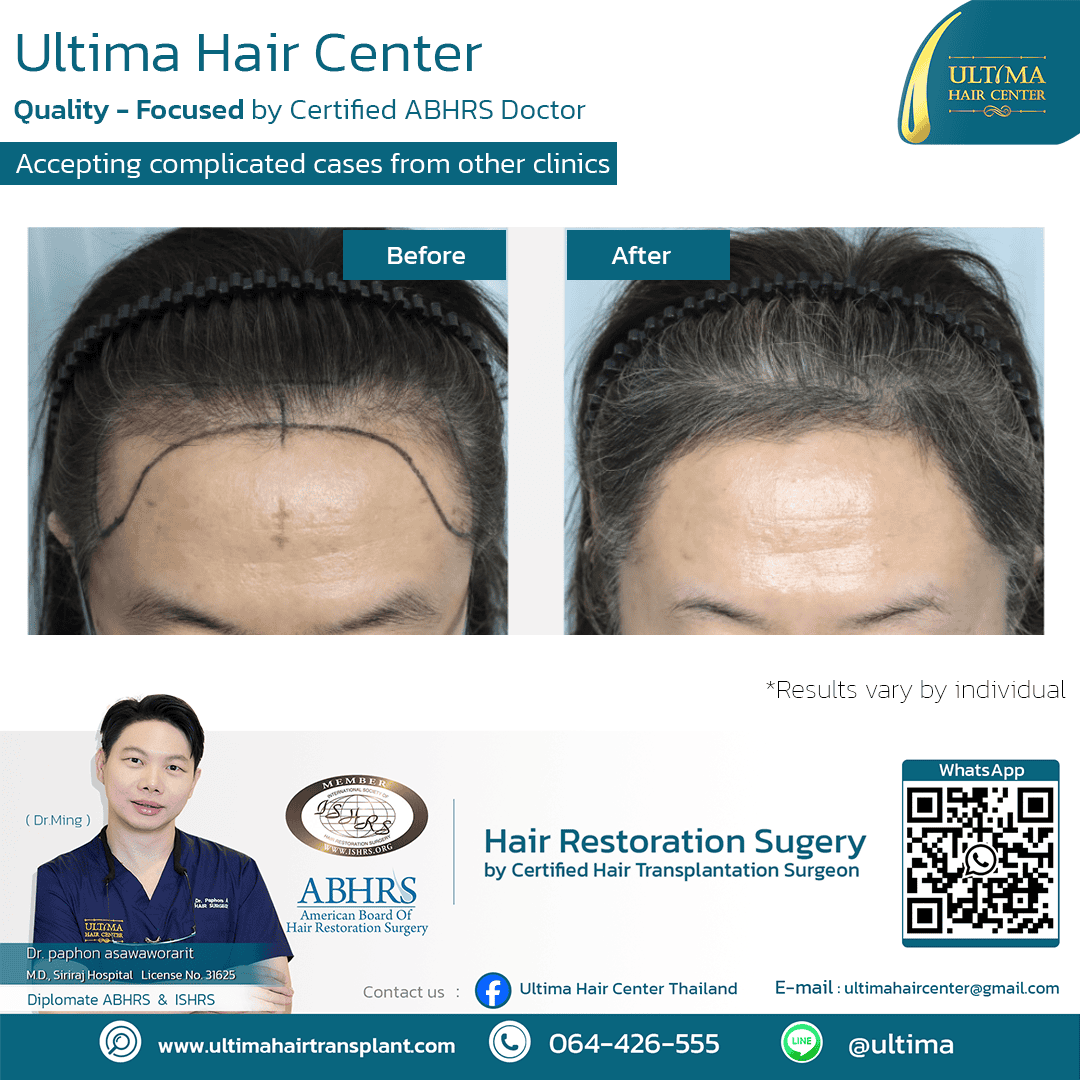
Similarly, when looking at Before & After photographs from a hair transplant, it is important to consider lighting, camera angle, the time elapsed after treatment, the number of grafts, the patient's original hair characteristics, and other treatments used
Therefore, reviews can be useful as part of the decision-making process, but they should not replace a medical evaluation
 Conclusion: Hair Growth Serums Exist, but Not Every Serum Will Make New Hair Grow
Hair growth serums do exist, and there are serum or solution-form products designed for use on the scalp that are genuinely available on the market. However, they do not increase the number of hairs in the same way as a hair transplant, and the effectiveness of a product should not be judged from its name alone
If a serum contains Minoxidil as its active ingredient, it has stronger medical evidence for the treatment of androgenetic hair loss than many general hair-care products. Studies have found that topical Minoxidil can promote hair growth in people with Androgenetic Alopecia, although results vary between individuals
By contrast, serums containing plant extracts, vitamins, or other ingredients should not automatically be assumed to have equivalent effectiveness, because the level of evidence varies between different ingredients
For people experiencing hair loss, the most important issue is therefore not simply choosing a serum based on advertising claims, but understanding what is causing the hair loss
For early-stage androgenetic hair loss, there may be several treatment options. However, when the degree of hair thinning is appropriate for hair transplantation, a hair transplant may be another option. This requires careful assessment of the Hairline, existing hair density, and Donor area
At Ultima Hair Center, we focus on evaluating each patient's hair concerns individually rather than looking only at the number of grafts or choosing a treatment based solely on advertising claims. Those interested in a hair transplant with Dr. Ming can ask questions and discuss their hair-thinning concerns before making a treatment decision
Dr. Ming personally responds to patient messages, allowing people who are researching their options to discuss their hair concerns directly before deciding on treatment. Patients can also consult Dr. Ming for free
For those looking for a hair transplant with an American Board-certified ABHRS physician, it is important to consider the physician's qualifications, analysis of the cause of hair thinning, treatment planning, Donor area quality, and follow-up care rather than focusing only on price, graft count, or hair transplant reviews
The concept of quality-focused hair transplantation is to create a treatment plan suited to each individual's hair characteristics and goals, with the aim of achieving a natural-looking hair transplant that is appropriate for the patient's future hair-loss pattern
 Frequently Asked Questions About Hair Growth Serum
1. Does hair growth serum really exist?
Yes. There are serum-form products genuinely used for hair and scalp care and for certain hair-loss treatments. However, their effectiveness depends on their ingredients. General hair-care serums should be distinguished from products containing active ingredients such as Minoxidil, which has stronger medical evidence supporting its use
2. Can hair growth serum really make hair grow?
This depends on the type of serum. If it contains Minoxidil as an active ingredient, evidence supports its ability to promote hair growth in people with androgenetic hair loss. However, not everyone responds in the same way. General hair-care serums should not be assumed to promote hair growth simply because of the product name
3. How is a hair growth serum containing Minoxidil different from a general serum?
Minoxidil is an active ingredient with clinical evidence for the treatment of androgenetic hair loss, whereas general serums may contain various nourishing ingredients or plant extracts with different levels of supporting evidence. The specific ingredients and clinical data for the product should therefore be considered
4. Will hair become thicker quickly after using a serum?
You should not expect hair to become noticeably thicker within a few days or weeks. Hair-loss treatments take time, and Minoxidil may require several months before its effects can be evaluated. Some people may need approximately 6–12 months before the results become clearer
5. Can hair growth serum treat every type of hair loss?
No. Hair loss has many possible causes, including androgenetic hair loss, Telogen Effluvium, Alopecia Areata, scalp disorders, nutritional deficiencies, and other factors. Treatment should therefore be selected according to the underlying cause of hair loss
6. Can hair growth serum replace a hair transplant?
There is no single answer for everyone. For early-stage hair thinning, medication may be one treatment option. However, when there are clearly defined areas of hair loss that are suitable for transplantation, a hair transplant involves taking hair grafts from the Donor area and placing them in the desired areas, making it fundamentally different from using a serum
7. Is hair growth serum necessary after a hair transplant?
Not everyone needs to use the same serum after a hair transplant. Postoperative care and additional treatments may be recommended according to each patient's existing hair and individual condition. Products applied to a recently transplanted area should particularly be used according to the treating physician's instructions
8. Can hair growth serum reviews be trusted?
Reviews can be useful as part of the decision-making process, but they represent individual experiences and cannot confirm that the product will produce the same results for everyone. Ingredients, research studies, and medical evidence should also be considered
9. What should I do if my hair is still falling out after using a serum?
If hair loss continues, it is better to investigate the cause rather than repeatedly changing products. Hair loss may be related to androgenetic hair loss, stress, Telogen Effluvium, scalp disorders, or other factors that require appropriate evaluation
10. Should I consult a doctor before using a hair growth serum?
For general cosmetic hair-care products, seeing a doctor may not be necessary in every case. However, if you have significant hair loss, progressive hair thinning, or are considering a product containing an active medication, consulting a physician can help determine the underlying cause and identify an appropriate treatment approach
11. Is hair growth serum suitable for people who are considering a hair transplant?
It may be appropriate in some cases, but it should not replace a proper pre-transplant evaluation. People considering a hair transplant should have the cause of hair thinning, future hair-loss pattern, Donor area quality, and overall treatment suitability assessed before making a decision
12. If I am considering a hair transplant, should I use a serum or have a hair transplant first?
The decision should not be based solely on the product name or the amount of hair being shed. The first step is to determine the cause of the problem, where the hair thinning is occurring, and whether non-surgical treatment options remain appropriate. If a hair transplant is suitable, the procedure can then be planned according to the individual's hair characteristics and long-term needs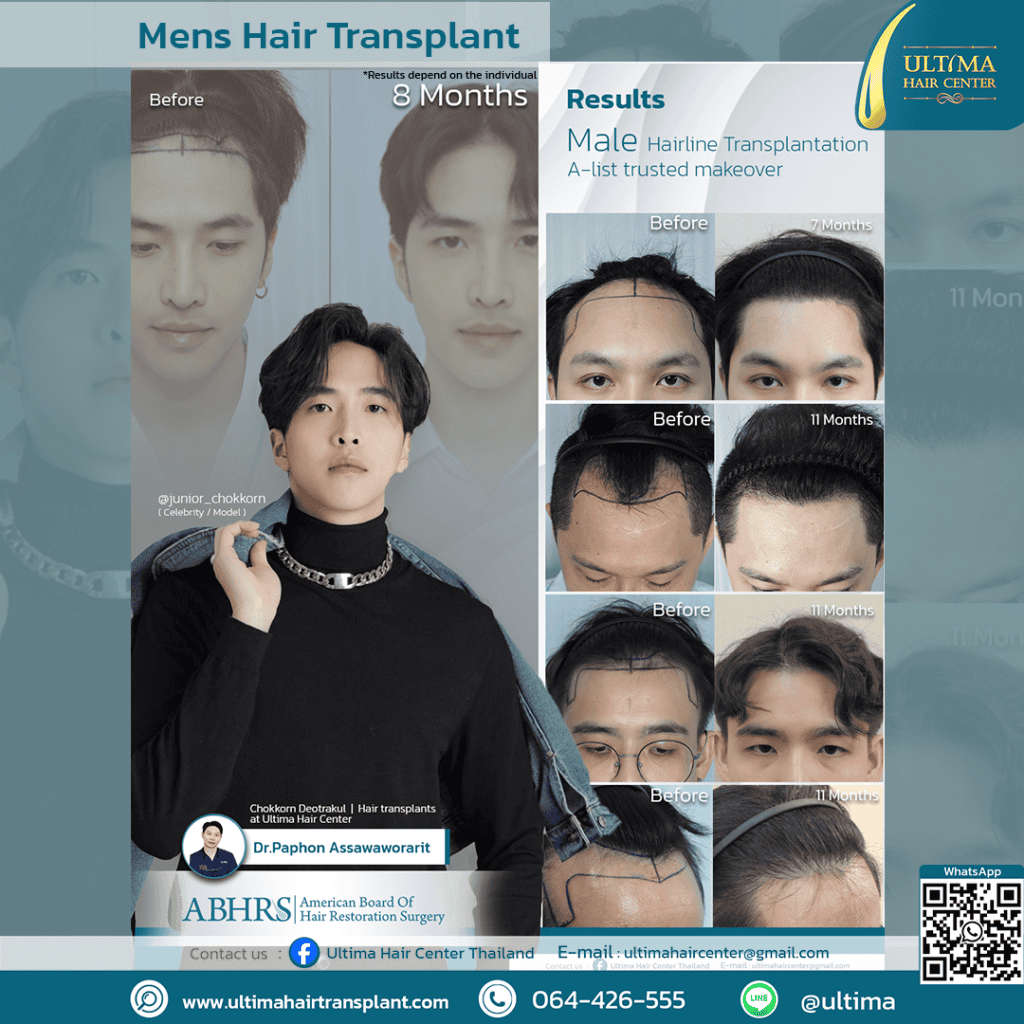
Contact Us:
Dr. Paphon Asawaworarit (Dr. Ming)
Physician Directory ABHRS
Ultima Hair Center (Thailand Website)
Ulitma Hair Transplant (English Website)
Line: @ultima
E-mail: ultimahaircenter@gmail.com


Comments
Post a Comment